Thursday, 22 June 2017

Burmese Nosh: First Contact

OK, actually, first contacts.

But anyway.

I met a couple of young Burmese people (and yes they call it Burma, not Myanmar) socially recently, who inspired me to try Burmese food. I've yet to visit Burma/Myanmar, which only recently opened up to tourism and commerce. And the cuisine was not even on my radar previously. But turns out there are a couple of decent Burmese food outlets in Singapore, so I gave it a go.

Twice. It's GOOD!

This experience of Burmese food offered unique, fairly fragrant flavours and tasty balances of mild spice, sour, nutty etc. The cooking doesn't use coconut like nearby countries do, and it is not frighteningly chilli-full either. (OK, this restaurant would be catering to a local Singaporean audience, but most SE Asians are unafraid of chilli!) So my guess is that overall Burmese cuisine is milder than others, such as Indian or Thai, from which it apparently draws historical influence (alongside Chinese). My personal view is that Burmese cuisine is not unlike Peranakan (Straits Chinese) food in terms of delicate flavours and combos. But obviously, I've only had a limited experience of it so far. And as one Burmese friend said, this restaurant was only about 60% as good as the real deal back home. 

Either way, here is a selection of the dishes I tried :)

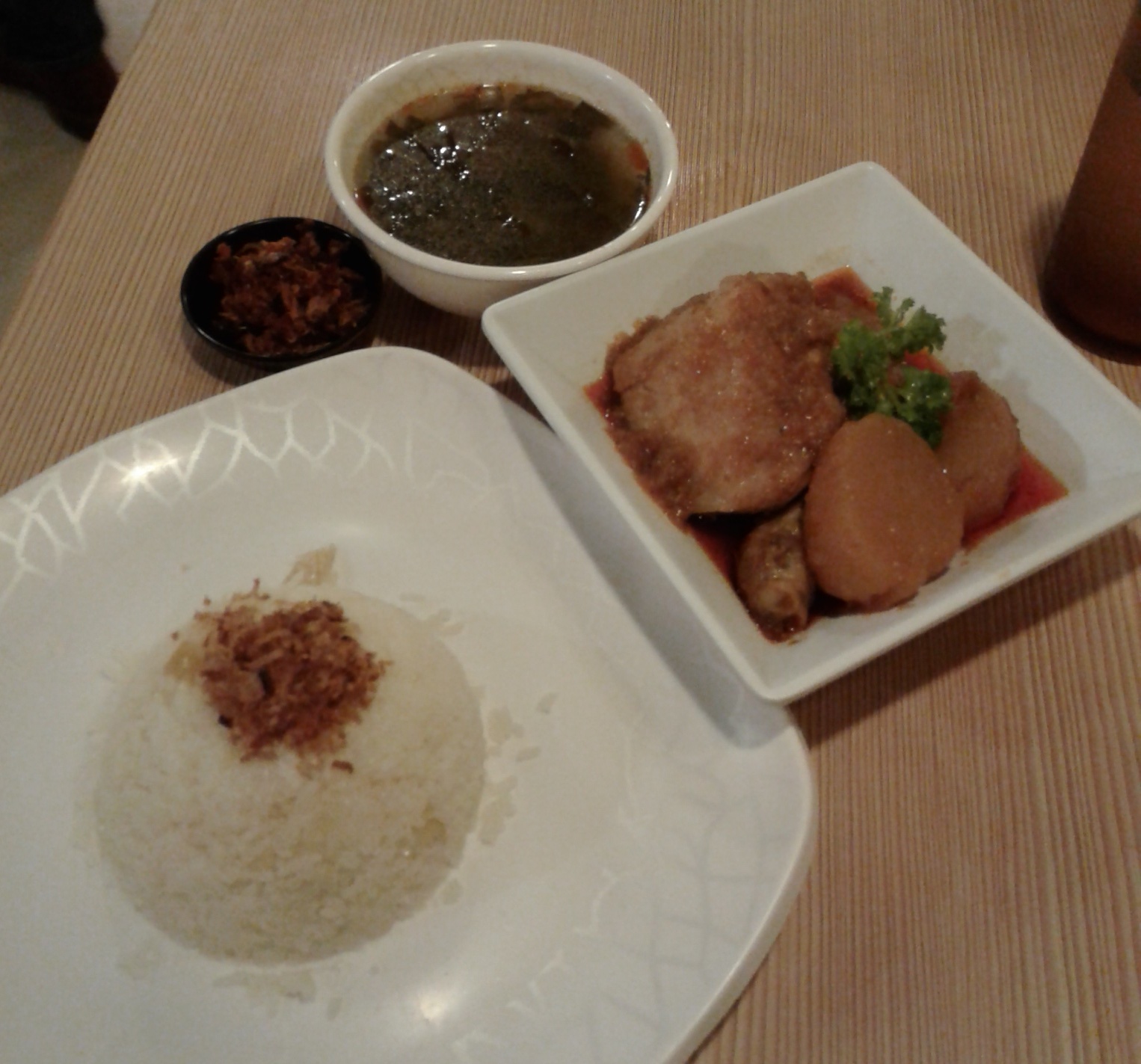
Black Bean Pork
Tender pork stewed with black bean sauce. I don't know what's in the recipe (apart from, one would guess, black beans!) but the gravy was rich, nutty, black-beanish with a touch of 'sour' to it ...I might even say 'lemonish' but apparently there's no citrus in there. It came with rice and a watery sour/spicy soup. 


Tea Leaf Salad
This is more a 'mix', not a Western-style leafy salad. Ours was served pre-mixing, so that we could try the components individually. But it was good as a mixture too. The ingredients included: stewed tea leaves, dried shrimp, garlic cloves (require peeling!), a potpourri of various (roasted?) nuts, raw tomato and green chillis. A tasty, crunchy combo, though I avoided the chillis!


Chicken Curry with Butter Rice
Tender chicken in a sort of fragrant, flavoursome curry sauce. It was not a creamy, heavy curry, but quite a light one, with mild chilli spice, and includes potatoes - yum. And maybe that slight hint of (not) citrus again?? (Is it tamarind?) Rice was indeed buttery, and the meal came with a sour/chilli side soup with greens again, which was quite a good flavour complement. 


Shwe Yin Aye (a rampant rainbow-coloured cendol dessert!)
Cendol (chendol) is actually a green noodley thing used in a lot of SE Asian desserts (a fave of mine being the Malay pudding called... erm, Cendol!) The Burmese version is a different recipe, and offers a selection of cendol, jellies, coconut jelly, sticky rice, sago, white bread, beans and nuts, all in a creamy coconut soup. It wasn't bad, not too sweet, the rice and sago were particularly nice. The bread was a bit strange to me, but perfectly edible in the mix!  


Where?
We went to: Inle Restaurant in Peninsula Plaza, Singapore. http://www.inlemyanmar.com.sg/

If you're feeling braver re 'guessing the menu' the next door, more casual, YaNant Thit was also recommended for curry. (I think some of the menu is in Burmese, hence the 'guessing' aspect!) https://foursquare.com/v/yanant-thit-burmese-food/4bf510176a31d13ae667962e

Happy eating!


Wednesday, 24 May 2017

Classic British 'soaps' and the TV Dinner

'Soaps' is short for 'soap operas'. I'm not sure if the term is used universally, but it refers to long-running drama series. Soaps are a similar concept to Japanese 'doramas' or K-dramas. I think the nickname arose because in the past these dramas were often inter-cut with TV ads for soaps and detergents. 

The UK is famous for its 'soaps'. Some of them have run for decades, covering all sorts of contemporary social evolutions, and are well-known parts of British culture! Soaps are usually characterised by not-so-realistic storylines, being easy to watch/listen to (quite addictive!), and often broadcast during family viewing/listening times. 

Most British soaps are based in working-class communities. And they often clumsily try to weave  topical social issues (divorce, homosexuality, racial issues, bullying, homelessness etc) into their storylines. In later years, a lot of soaps also started to introduce ridiculous plots (murders etc!) to get higher ratings. Soaps are often broadcast on several days each week.

A classic UK trend during my childhood was to eat a 'TV dinner'. This means eating your evening family meal (often on trays on your laps) while watching a soap together. The main shows were screened at about 7pm = dinner time!

Tbh, I haven't watched any soaps since I was a teen - but here are some well-known UK ones. If you are not British, note the regional accents...

1. Coronation Street (known as 'Corrie') - TV
This series is set in the North of England, in a fictional town called Weatherfield. The series has been running since 1960! It covers the lives of local residents, who often congregate at a pub called the Rovers Return. There are elements of humour in Coronation Street, but on the whole the storylines tend to be depressing to watch (this is a trend with UK soaps!) 


2. Eastenders - TV
This soap began in 1985. It is focused on a fictional place in the East End of London, called Albert Square. It features the lives of local cockney residents, who often congregate at a pub called the Queen Vic. (Seeing any similarities here? ^^)  This show also has lots of depressing storylines, and some of the most miserable are traditionally screened at Christmas! (Happy happy!)


3. Emmerdale - TV
This one is set in a fictional, rural farming community in the North of England. It used to be called 'Emmerdale Farm' but in the late 80s, it got a trendy makeover to boost ratings. Suddenly it became a lot more 'racy' and glamorous! And while sleepy Emmerdale Farm was screened on weekday afternoons, the new version has a later, peak broadcast time. Emmerdale Farm started in 1972. 


4. The Archers - Radio 
Is set in a farming community in the English Midlands. The first episodes were broadcast in 1950, and it is the world's longest-running soap. The storylines cover (clumsily portrayed!) topical social aspects, farming, and the relationships of residents of a fictional, rural town called Ambridge, where the Archer family lives. The storylines are more lighthearted than those of Corrie or Eastenders! The show features characters of all classes.

The Archers was first introduced to encourage farming after WWII, when Britain needed to boost agriculture. It's just a regular drama now, though I think it might appeal to older generations than some of the other UK soaps! 


My grandmother and mother used to listen to The Archers. In our household, the weekend Omnibus edition would often be on the radio while traditional Sunday lunches were being prepared :)

Listen: http://www.bbc.co.uk/programmes/b006qpgr/episodes/player


Honourable Mentions: The Aussie Soaps
Aussie soaps Neighbours and Home & Away were HUGELY popular in the UK during the 80s and 90s. I am not sure if they're still being broadcast there? These soaps were altogether more sunny and cheerful than the UK ones, and were screened at about 5pm. They were an absolute must-view for housewives, and most University students!


Other Classic UK Soaps
  • Hollyoaks (1995-present) - unrealistic lives of a group of plastic young people in a fictional town near Chester in England. 
  • Brookside (1982-2003) - depressing drama featuring the residents of fictional Brookside Close in Liverpool. The close (a group of houses) was actually built in real life, and the series was filmed there.
  • Crossroads (1964-1988 - resurrected briefly in the 90s) - low-quality drama set around the fictional Crossroads Hotel in the North of England.


Saturday, 13 May 2017

Nitro Coffee - gimmick, or worth another try?

This stuff has been around for couple of years worldwide. It originates from bespoke coffee houses in the USA, apparently. And this one came to Singapore via Korea. I rather like coffee, and had been curious for some time to try it. 

What is it? 
A cold coffee, which is infused with tiny nitrogen bubbles, which apparently alter both taste (richer, sweeter, smoother) and texture (creamier). It is served from a pump, like beer. And to all intents and purposes, the black version pours, looks and settles just like a Guinness! 'Cold brews' (coffee made by steeping beans for ages in cold water, rather than quickly with hot water) are all the rage these days, it seems - but not all are also Nitro.

I tried black Nitro coffee for authenticity. My friend had the milk (white) version for contrast. 

The Verdict
It's OK. Tbf, we had a disappointing experience with the venue we chose. The service was snotty, and the black brew was served with about 60% ice (as well as being cold from the tap!) which watered down both texture and taste. So I can only review on this basis.

Texture: seemed unremarkable, but might be different without so much melting ice! Taste: definitely less acid, and sweeter than a regular black coffee (which is normally far too sumpy for me). But the flavour was, again, heavily influenced by meltwater! The white one was nice enough, milk-shaky, looks pretty - but nothing special about flavour or texture compared to other coffees. 

The cost comes in at about $2 more than a regular coffee (the white one a bit more). I am still not sure if it's worth trying this stuff again, maybe at a better venue? Or might it just be another hyped gimmick, like Frozen Foam Beer and other things? If I do try, I'll let you guys know! 

Where it is served in Singapore: some branches of Coffee Bean & Tea Leaf have Nitro pumps. (This applies in other countries too.) Some Starbucks branches also have it worldwide; and probably smaller, craft cafe outlets in your area :)

[Avoid: Boyles Coffee Singapore if you prefer nice service, and don't want to pay $5 for ice!]


Also on this blog: 
Frozen beer foam beer


Monday, 24 April 2017

Borrowed Words - England, Japan & France

I had coffee with a Japanese friend yesterday who asked me about a Katakana word, 'janru'. 

As you might know (and I've talked about it on this blog) Japanese has an extensive vocabulary of foreign words, spelled / pronounced in a phonetically Japanese way. And there is a special Japanese alphabet - Katakana - with which to write them. 

Janru (ジャンル) in Japanese apparently means 'type' or 'category'. My friend knew it was foreign, because it's written in Katakana. But which foreign language.. more of a mystery. Many Katakana words are from English, but by no means all. 'Pan' (パン - bread) for example, is from Portuguese - as are quite a number of words, due to historical dealings with that country. 

He wondered if janru was French or English. And in fact, I think he is right on both counts. In British English, we use 'genre' (pron: jon-rer) to mean a type or category. But the word is French. Japanese is not the only language to borrow! 

We use a lot of modern French words in modern English. Of course, one of the many ancient influences on the English language is French - not least from being conquered by them (and for centuries it seems boundaries between, and rule of, the two countries were much more 'fluid' and disputed than they are today!) Most of these French words were absorbed into English many hundreds of years ago, and they've become corrupted over time. So we can't even recognise them as 'French' any more. They are now English! (Often if an English word is pronounced unlike its spelling, it came from original French!)

But aside from this, we have just appropriated convenient French words and their meanings for everyday modern English. 'Genre' is one of them. And we have many more!

Here are some others,  with very rudimentary attempts to help with pronunciation... ^^

- RSVP
Meaning: please reply. It is an acronym for Répondez, S'il Vous Plaît.

- Chauffeur
Meaning: driver.

- Déjà vu (dayjah vu) 

Meaning: literally 'already seen' - the inexplicable feeling that what you are experiencing has happened before.

- Chic (sheek) 
Meaning: stylish.

- A la Carte
Meaning: literally, by the menu. We use it to mean choosing individual dishes from the menu.

- Au Fait (oh fay) 
Meaning: knowledgeable of, familiar with. Example: "Sarah is au fait with HTML coding". (She's not an expert, but she's proficient at it!) 

- Enfant Terrible (ohnfohn ter-eeble) 
Meaning: literally 'terrible child'. But it refers to a person who is shocking or unconventional - and often used as a slight compliment in creative circles. "He is the enfant terrible of fashion design!" implies he is shocking but maybe brilliant.

- Entrepreneur
Meaning: a person who sets up and runs ventures.

- Gaffe
Meaning: a blunder. To make a gaffe is to stupidly say something badly inappropriate. 

- Clique (cleek)  
Meaning: a closed group. 'Cliquey' is not a very positive thing in the UK. 

- Gauche (goh-sh)  
Meaning: literally in French it means 'left' (which perhaps implies a clumsy left hand?) It is a word applied to socially inexperienced or clumsy people. Often young people trying too hard! "Oh dear, that new Chris guy is a bit gauche!"

- Omelette
Meaning: an omelette! (The Americans often prefer to spell it omelet)

- Au de Toilette (oh de twahl-ette) 
Meaning: literally, 'washtime water'. But it refers to perfumes, as most of us know! It means the slightly more watered (and more affordable!) version of a fragrance. 


Incidentally, due to the long term success of these industries in France, global terms using French increase a lot if you work with sectors such as fashion, art, music, food, wine, perfumes and other luxury goods! 


Jean Paul Gaultier was an 'enfant terrible' of fashion design!     


Also, does France borrow modern English words too?? (Or even historically, did the language exchange go both ways??) OR are there Japanese words out there (besides perhaps Manga and Anime) which have been adopted into the day-to-day of other cultures? If you know, please do add in comments!


Photo credit: Style Gibberish


Also on this blog: 

Semen everywhere! (And the cat oven explained)
A Few Strange British English Pronunciations


Friday, 21 April 2017

East / West drinks: Healthy Barley

This drink is so ubiquitous across Singapore and Malaysia that locals will probably think I'm nuts even writing about it. But in fact a) it is quite yummy  b) it might have health-giving properties c) it might be another of the things shared between the SE Asia and the UK.

In Singapore
The drink is a traditional Chinese one, and is basically boiled barley (ideally Chinese barley, apparently) to which some honey or sugar is added for flavour. The drink includes soft barley grains in it and you can drink it hot or cold (and eat the grains). When not too sweet, I personally find it a very refreshing, stomach-calming beverage, and a good antidote to over-oily or spicy food.

You can still buy the relatively real-deal at hawker centres in Singapore. (Plus a whole host of fake / chemical canned and bottled versions too, which are worth avoiding!) Here's a homemade one I bought at a hawker centre last night :) 


In England
Barley water in the UK is also an old, traditional drink, it turns out. In Europe, even the ancient Greeks drank it. I don't know if England's version was locally evolved, or was inherited from one of the countless invasions we had historically. But it's old. And probably not stolen from Asia! The English version is also barley boiled in water, but tends to contain no grain on serving. It is often flavoured with honey/sugar, and additions such as natural orange, mint or lemon. Today (and even when I was a kid) barley water was seen as an old fashioned drink which granny favoured. And I'm not sure how common or easy it would be to buy the real thing now. (Unless it has gained popularity on the hipster circuit, maybe?) 


20th century advertising: I first encountered 'barley water' as a bottled, mass-produced, cordial to mix with water, by the same people who made (fake) orange 'squash'. It was the 1980s, I was about 10 years old, and I preferred fake barley because it didn't contain the same, asthma-inducing, chemicals that the popular, fake, orange 'squash' did! (These were the days before we realised the harm in chemical additives and started to regulate them / warn consumers...) Back then, mass-produced barley water's refreshing qualities were nonetheless advertised in association with Wimbledon tennis and classy summer sports. In fact the drink had been associated with Wimbledon since the 1930s, apparently (when I assume it was a more natural, pre-chemical recipe!) Here's an ad from the 1980s (1970s??)


Healthy benefits of the real deal
According to (possibly tenuous)(possibly selling barley water) sites online, by Western standards this drink can help aid digestion, flush toxins and bacteria from the body, lower cholesterol, boost immunity, make you slim (!) and.. erm.. quench your thirst and cool you down. Who knows!

The Chinese believe that the drink is good for relieving 'heatiness'. This relates to yin and yang, and is different from Western 'heat'. Heatiness and anti-heatiness (coolly things) are very commonly talked about in Singapore, and I've never 100% got my head around it! The basic is that different foods lead to one or the other, and ideally you balance them to stay healthy. The beloved fruit durian, for example (heaty), is usually sold alongside mangosteens (coolly) at stalls. So you can keep balanced.

Make it at home!  
Either, way, it seems making your own natural barley at home might not be so difficult. Here's a recipe for English mint barley water if you wish to try it!
https://food52.com/recipes/18063-lemon-mint-barley-water 


Monday, 17 April 2017

Easter: eggs, crosses, simnel cake and things

Easter has just happened for most people in the UK (though some branches of Christianity celebrate it later, and I think other branches don't celebrate it at all). It's an annual festival, which has a moving date (a bit like Chinese New Year) but usually falls in European spring time. In the UK, we have two public holidays for Easter (Good Friday, and the following Monday) and it's our second largest festival, after Christmas. 

But I was asked recently by a Japanese friend what it was about, and why do we have  chocolate Easter eggs and bunnies.

Well, like Christmas, the festival has become largely a commercial event these days. But things like the eggs have roots in Christianity and (before that) the time of year.

Today we mostly know Easter as a Christian celebration; or sad day plus a celebration. It marks the time Jesus was crucified (Good Friday) then rose from the dead three days later (Easter Sunday/Easter Day). This is why Easter festivities include crosses, buns with crosses on them, simnel cake* etc. (FYI I think the word 'Good' is an old corrupted version of 'God' - it doesn't mean 'happy'!)

But spring time has also been a big deal for millennia in the West, during Pagan times, and long before Christianity appeared. It is the time when harsh winter is finally over, daylight and sunshine return, animals start breeding, shoots appear, trees regain their leaves and blossom, and conditions are right to sow seeds for the autumn harvest. So spring time always symbolised a return to life. Which coincides pretty well with the messaging for a resurrection!

So Easter eggs symbolise 'new life', which could apply to Jesus, and/or to spring time. For centuries before Lindt, Cadbury's and Suchard, old cultures would gift eggs at this time of year. And about 1000 years ago, people started to decorate them, or their empty shells. For Christians the empty egg shell can also symbolise Christ's empty tomb. Today, people still decorate real eggs. But it's more popular (worldwide) to buy and eat chocolate versions! 

Before Christianity, there was also a Pagan festival on the Spring Equinox, for a Goddess named Eostre. (Sound familiar?) Her symbol was apparently the rabbit - the origin of our famous Easter bunny :) In fact, in some cultures, the Easter bunny (which is supposed to bring a gift of eggs to good children) had a role similar to that of Father Christmas/Santa. I think this folk tradition only appeared about 300-400 years ago, however. And I'm not aware of it being a particularly big part of Easter in the UK. 

In ancient times, it was common for budding Christianity to take on local, existing Pagan dates and details as a skillful part of its 'change management' practices. And, like Christmas and Halloween, Easter seems to be a mixture of Christian and Pagan. There are apparently even pre-Christian 'resurrection-after-three-days' stories (of different Gods) in Europe and Western Asia, which some believe influenced the detail of the Christian resurrection, when it finally ended up in the Bible.

Cooking special buns for celebrations was also an ancient custom, which got 'upgraded' with Christianity to include a cross for this festival. Other popular Easter symbols like cute Easter chicks, ducklings and lambs, tend to illustrate new life and spring. 

Hope that was helpful!


*Simnel Cake
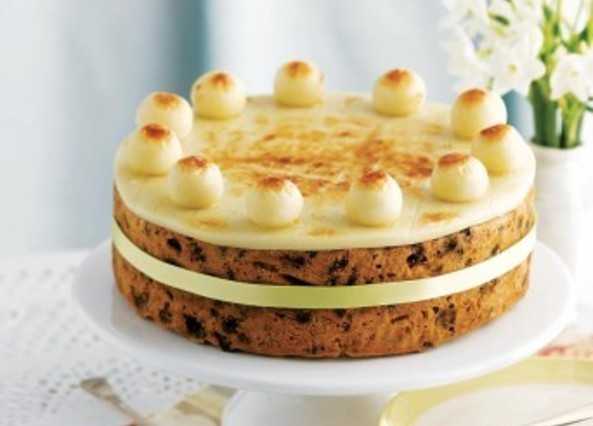
Is a kind of light fruit cake, iced with marzipan. I don't think I've ever eaten this cake, but apparently you slice and then toast it before eating (which tbf doesn't sound that appetising!) But I do remember that the top is decorated with 11 marzipan balls, which symbolise Christ's 12 Disciples from the Bible - without Judas, the traitor. Sometimes there are 12 balls, which include Jesus. It's a traditional thing to eat at Easter time, and you can buy it in UK supermarkets, though it is less popular than chocolate eggs and hot cross buns. 


Photo credits: Bunny - easterbunnyeggs.us; Cake - Sainsbury's. 


Also on this blog: 
Easter: Hot Cross Buns 
Christmassy Things: Christmas! 
Halloween


Friday, 14 April 2017

Easter: Hot Cross Buns

Enter the humble hot cross bun!

Well, actually, not so much in Singapore. (Though you can buy them here in M&S :) )

Hot cross buns are a traditional Easter food in the UK. You're supposed to eat them on Good Friday (today), but we now eat them across the festival period. They are spiced buns with a cross shape baked on the top, which signifies the day of Jesus's crucifixion (Good Friday in the Christian calendar). 

You buy the buns ready-cooked, then toast them at home, so that you eat them hot, and slightly crispy at the edges. You cut them in half before toasting, and can spread on butter, or butter and jam / marmalade / other sweet toppings afterwards, making a kind of sandwich. (Like many British baked products, they are edible but slightly unpleasant un-toasted!)

The buns are basically a faintly sweet and spiced bread, into which are baked sultanas, raisins, and pieces of candied peel. The cross shape is usually made from a kind of pastry, rather than dough.

Eating hot cross buns also traditionally marks the end of Lent. Which in the past (or for very religious people now) also meant a return to eating sweet and richer foods, after abstinence. 

Hot Cross Buns in Singapore. Slightly burned because I had to use a toaster on them! *

* In the UK, every kitchen has an oven, and a large grill - which is what we use for toasting things other than sliced bread. In Singapore, it is rare to find an oven/grill at home. So I had to improvise!


Also on this blog:

Stuff Valentine's. Here's a much better Western festival to celebrate this month
Things I Miss About the UK No 3: Crumpets