Tuesday, 1 October 2019

Beans

In UK colloquial food-speak, if someone says 'beans' it only really means one thing: canned baked beans in sweet tomato sauce. Basically the world-famous Heinz style offering (and various British own-brand store versions).

Canned baked beans have become so much a part of UK culture, that they require no further information! And I realised this recently while talking to a friend from France (where it seems 'beans' rightly means, well, any kind of bean-ish legume!)

British people do actually eat (and grow) many other kinds of bean (green beans, runner beans, broad beans to name a few). But they will usually be described in a way that distinguishes them from 'beans'.

In fact the origin of today's baked bean is native American (where maple syrup was used in the sauce). And, like so many other recipes worldwide, it was admired, and adapted by others. In this case American colonists - eventually finding its way to the UK in the late 19th century via Heinz's canned exports. In fact, like today's humble orange, canned baked beans were a super-luxury item back then, sold through London's exclusive Fortnum & Mason! Today's popular UK version is less sweet. And much more accessible ;)

Brits tend to eat baked beans (always heated!) on buttered toast, as a side to other traditional dishes, or as part of a cooked breakfast. They became an integral part of traditional British breakfasts - the Full English and Scottish, and also Irish*, apparently - from the early 1900s. That's over 100 years to build their 'iconic' status in the UK!

Photo: BBC Good Food
* Yes, all these regional variations on a cooked breakfast exist!


Also on this blog:
Ipoh and Creme Caramel - the Global Dessert 
British Christmas Nosh


Tuesday, 24 September 2019

Ipoh and Creme Caramel - the Global Dessert

This Christmas I joined some friends on a trip to Ipoh, a Malaysian town situated somewhere between Kuala Lumpur and Penang.

The town itself is interesting. Quite Chinese-influenced (Malaysia's ethnic populations are Malay, Chinese and Indian) Ipoh today is a blend of authentic old stuff, alongside some quite smart and thoughtfully conceived hipster places.  So you'll find interesting, locally-executed, modern  cafes and boutique b+b's, alongside fab old peranakan architecture and Chinese hawker stalls. I guess what makes Ipoh currently different from some other towns in this region, is that it has yet to become properly touristy (ie a plasticated and homogenised 'Asia' for foreign audiences) or too gentrified like the now very beautifully restored (and expensively desirable!) heritage areas of Singapore. A lot of Ipoh still has unique charm. Be it the old stuff - which is still reminiscent of the 60s and 70s in this region - or the new, which has definite Malaysian roots.

One detail which slightly surprised me in the old Chinese hawker places, however, were ubiquitous period posters for what looked suspiciously like my mother's homemade English creme caramel dessert. It's the first time I'd seen such ads in this region. And yep, it was the same dessert!

Creme caramel is an old European recipe. The name is French, but the pudding's exact origins might be French or Spanish. In the 20th century it became especially popular across Europe, including being on-trend in 1970s and 80s Britain (when my mother used to make it!)

But the Brits didn't introduce it to old colonial Malaya. Seems this tasty pudd was imported way before that, by the Portuguese in the 1500s, and it began to gain Southeast Asian popularity from there! Although I'd never encountered it before, turns out creme caramel - known in Malaysia as caramel custard - is a fairly traditional and popular recipe with all the ethnic communities there.

In fact, this dessert was introduced variously by the Spanish, French and Portuguese to all sorts of historical colonies and trading partners worldwide. And you will still find variants on these old recipes in Latin America, India, The Philippines, Japan, Vietnam and elsewhere! Who knew?

A truly universal pudding :)

Caramel custard image in Ipoh

This post was first drafted in 2018.


Wednesday, 18 September 2019

British Birdsong

As some of you know, I love birdsong, and have all my life! There is something very evocative about it - of country, of temperature, setting - for me. 

And the UK - possibly because most of my childhood was spent there - has some of the most evocative. These aren't the big, projected chirrups of tropical birds, but when you get used to them, they're very distinct. Most of these birds have many different calls (for mating, alarm, general chat!) but I've picked the ones I know best for these four faves.

You will hear less bird-life in London than in rural parts of Britain. A spring or summer woodland in the UK can be a cacophony of really quite lovely singing, and worth visiting!

Chaffinch
This is such a springtime + sunshine (morning) song for me! Though as this video shows, these guys sing at all times of year :)


Blackbird
One of the most common and unremarkable-seeming of British birds. But they have a very clear and pretty song. This video also features their agitated alarm calls (which we did hear when the cats were outside!) Blackbird calls are very reminiscent of long English summer evenings to me!


Woodpigeon
Another song very evocative of long, warm, relaxed summer evenings in rural areas. These plushie guys are different from London's famous, scrawnier, city pigeons (which are descended from lost racing pigeons). I have seen Woodpigeons in the city's leafier parks, but not heard them - perhaps due to urban noise pollution?


European Robin
These guys' clear little tones can be heard year-round in the UK. And they always makes me smile. Robins are much-loved in Britain. Partly because they're quite social with humans (they will often sit near gardeners for example - I expect hoping to get worms and bugs exposed by the work!) They also have a place in old Christian folklore, and their winter presence and cheerful plumage has made them emblematic of Christmas :) 


Also on this blog:
Favourite bird calls of Singapore


Wednesday, 11 September 2019

Martial Art of the Month: Lethwei

Lethwei, aka Burmese boxing, or Burmese bare-knuckle boxing, popped up on my radar while watching some Asian MMA fights. Seems this particular promotion is breaking the Myanmar market, and so is hyping its Burmese fighters - many of whom have Lethwei in their arsenal. I had not heard of the art before. And it's brutal!

From what I can make out, Lethwei shares many aspects with neighbouring striking arts such as Muay Thai and Khmer boxing. The big differences are, however:
  1. Rather than being a foul, head-butting is an integral part of the art
  2. No gloves or mitts are worn - only gauze wraps. (This should also make for some pretty lethal/painful strikes) 
  3. In local and traditional bouts, at least, there are no points, only knockouts. And you could knock your opponent out more than once before the game is ended.
Lethwei is an old art. I can't find dates which agree online, but it seems there are carvings depicting it in Burma's ancient Pyu cities. (Which apparently date from 200 BC to around 1100 AD - which is fairly broad!) But perhaps uniquely, when fights were held for entertainment, it seems that anyone from a king to a farmer could get into the sandpit-ring and call for an opponent.

How it works: While muay thai is known as an art of eight limbs (strikes using punches, kicks, elbows, knees) the use of the head makes Lethwei nine limbed. Just as there are multiple techniques to learn for say kicking, or elbows, there are also multiple kinds of head-butt in Lethwei, which can be used in different ways. More clinching is allowed in Lethwei, as well as some familiar throws and sweeps.

Traditionally - and in modern local matches - the only way to win is to knock out or  incapacitate your opponent. If both fighters are standing, the bout is declared a draw. Even more unusually, if one participant is knocked out, his or her corner has two minutes to revive their fighter, and send them BACK to continue in the ring! This is not an art for the faint-hearted. 

A bout will usually consist of five, three-minute rounds. With a two minutes between each round. This is double the usual rest-time for sports like Western boxing or MMA - and perhaps it's needed?? In the modern day, groin and gum shields are compulsory.

Lethwei has also enjoyed some popularity worldwide. In the mid-20th century, a process of modernising the rules was undertaken, with the aim of making the sport more transferable overseas. In international fights, a points-system is used, rather than only KO or incapacitation options. The art has had some success in Japan. And this year the World Lethwei Championships were even screened to a global audience via UFC Fight Pass. 

Here's a vid showing a basic head-butt training technique. The reel features Lethwei star Phoe Thaw, and well-known international Lethwei fighter, Dave Leduc. The 'arm slapping' action at the beginning and end is called lekkha moun. It is the way of challenging a Lethwei opponent to fight. 


And some clips from contemporary Lethwei training + bouts in Myanmar. I watch a lot of fights, but these do seem pretty brutal even to me! Balls of steel required for this art, and I guess is shows a little how lethal traditional martial arts would have been in the field centuries ago - a matter of life and death after all. (You have been warned.) 


Also on this blog:
Martial Art of the Month: Cambodia - Pradal Serey (Khmer Boxing)
Burmese Nosh: First Contact 


Tuesday, 10 September 2019

After Asia: The UK Does Not Do Tech

It's true! 

When I first moved to Singapore eight years ago, I remember being slightly horrified that so many things were online and automated. Because to me, anything using technology would be at best unreliable for use. THAT is because I'd been living in the UK! I was delighted to find that in Singapore (and nearby countries) technology works 99% of the time. And it actually does what people had trumpeted it should: make our daily lives simpler, more efficient and less stressful! 

That last statement certainly did not apply to the UK in 2011. But shockingly, I find it still doesn't now! I had coffee with a Japanese friend quite soon after I returned and was having problems with internet service. And she basically laughed, and coined the title of this post: "The UK does not do tech!"

OK, of course technology exists in the UK, but in a vast majority of cases for regular humans, it just doesn't work. I know Brits will be hopping up and down going 'But it does work!' - but compared to even some developing countries in APAC, it really doesn't! Here are four examples from my recent time in London: 

1. Supermarket checkouts have been automated. There could be maybe 20 self-service machines in a larger store now. And regardless of whether you agree with automation or not, at the very least, that should mean no queuing for the customer. But it's almost guaranteed that 50-60% of machines will be Closed or Out of Service. Or in service, but break down while you're using them. So tellers no longer get paid, and customers still wait in long queues.

2. A large number of MRT stations (especially outside central Zone 1) are no longer manned. Again, a controversial move driven by cost, and there have been concerns over passenger safety etc. But it means that at some stations we rely solely on the machines for any queries or transactions. And again, 50% of the machines don't work! Or they will work for just one of the several services they're supposed to provide. But it might not be the one you need! I mean, a basic would be to allow people to buy tickets/travelcards, no? But I've been stranded at stations several times with groups of frustrated passengers - at a bank of machines all rejecting our cards and spitting out our cash.

3. Home internet breaks down! This is something I had completely forgotten could happen! In SE Asia, it's a given that your net is provided 24/7 - 365. Just like water, or electricity. And a company which couldn't do that would probably fold quite fast! And in fact, while living in Kuala Lumpur, we'd actually have power and water outages, but the net provider was solid throughout! (Well, apart from during the power failures obviously!) In the UK, net can fail completely, for weeks in some cases (as experienced with a terrible provider here called VirginMedia) and with ridiculously difficult processes to contact customer services, who are also not interested in helping! I am actually amazed that this company hadn't folded. But I guess the bar is set very low for service and tech, so people still go back to them? (Home internet is also very expensive in the UK!)

4. Online services do not work. Some do, and occasionally commercial outfits - such as my bank - have actually improved in the past eight years. But try to (again) buy a train ticket, order medication, or do other important things online, and there's a high chance that it won't work. AND it will probably require hours of your time and stress discovering this! AND old-fashioned systems have often been removed in favour of the non-functional tech - so you're left with no way forward! The centralised (non-MRT) train ticket systems are so atrocious that my flatmate (who needs to travel regularly for business) will actually make the trip across London to visit the station offices and buy in person. It takes a few hours of his day, but he says still saves time over attempting to do anything online! None of this seems very first-world.

Like I've said before, compared to the APAC region, the pace of change in the UK is very slow. But it has been EIGHT YEARS since I left, not eight months. And I find the continued inability to make tech work wholly perplexing! There are many, many very smart people here, who know how to do the various facets of tech. Famously, the internet was even invented by a Brit! So why, in 2019, does tech infrastructure still work so poorly? Sure, it's a bigger country than Singapore. And there's existing infrastructure to overcome (?) to put in the new. But making a basic website transaction work? Or getting reliable internet access for a home in central London? What's going on there? The failures happen across both government and commercial systems. Is there just terrible management managing the people who know about tech? A dearth of talent for one, vital facet of tech? One can't argue with the fact that technology is our present and future - so it seems unlikely that poor investment is the problem, especially at commercial level. Or - like the VirginMedia example - has the bar of performance for consumers just been set so low in the UK, that organisations just don't really care or try? 

It's not good news for our economy, though! Safety and ethics aside, wasting hours of working people's time, leaving them stranded at stations, or without medications, because of bad systems does not put us in a good position! Especially when other parts of the world have harnessed technology and are racing ahead with it. 

Hopefully I will at least be able to publish this post successfully! 


Photo credit: Twitter

Tuesday, 27 August 2019

Matcha of the Day: Tombo Cafe, London

Proper Japanese matcha places are hard to find in London. Though tbh so far I have either been working contracts (no time to sneeze, let alone search for matcha houses) or between them, and thus saving pennies in this (matcha) expensive city! 

But I'd had Tombo on my radar as an apparently Japanese place serving proper, Asian-style green tea drinks and desserts. So when I found myself near South Kensington recently, and with a little cash to throw around, I went in!

What I had: 
An iced matcha latte.

The price: GBP3.85 / S$6.53 
The size: average

The verdict: 
Passable. And probably better than many matcha lattes I've tried here (the UK standard in general is very poor!) This was a proper matcha latte - using cow's milk and normal matcha. And I made sure to ask for it to be sweet, and check the milk etc in advance, to avoid any horror shows like the Pret a Manger disaster.

But the milk was still regular stuff poured from a supermarket carton. (Whereas good, and cheaper, matcha houses in Asia test and source different milks to get the best possible experience for customers.) It took about 60 seconds to make - which was good as I didn't need to wait, but somehow felt a bit disappointing for the near £4 fee! Just the right amount of ice added. And the flavour was creamy, and with a little bit of strength. (I'm used to more strength, but hey!) Overall, it was recognisable as matcha, and I might go back if absolutely craving a green tea latte. But there was way too little bang for my bucks for it to be a regular - even if a Tombo was nearby.

Service was also pleasant. But in Singapore, for example, this drink would be considered mediocre and beyond over-priced. Perhaps that is as good as it gets in the UK?


Tombo: https://www.tombocafe.com/

Monday, 26 August 2019

Around London today: Dudding Hill

Most recently, I've been staying near Willesden Green in London. And given this sunny August weekend, I took a walk to investigate the nearest green space - Gladstone Park. 

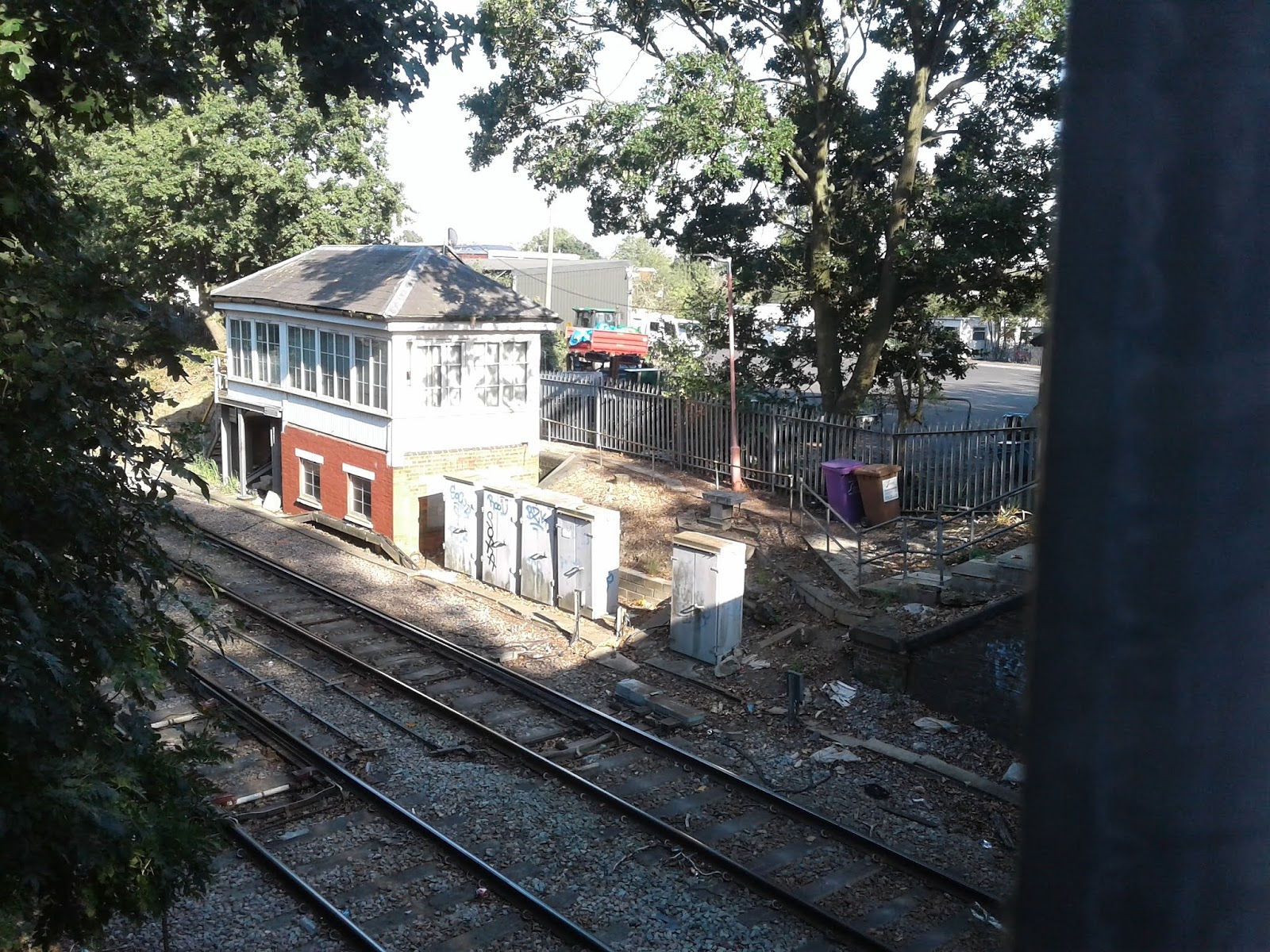
The park is OK - more of a heath or fields than one of the excellent Royal Parks in this city. But one thing which seemed interesting there was this small, old station - closed to the public, and labelled Dudding Hill Junction

Turns out this is part of a little railway that time forgot! 

The station is part of the old Dudding Hill line, which was opened with much excitement in 1868. The line itself is only about 4 miles long, serving areas of North West / West London. In the late 1800s, the Willesden area (I think in part because of swanky new rail services) was morphing from an outskirts village, into a middle-class London suburb. [Which is kinda reflected in a lot of the architecture here - though today it's Zone 2, and fairly central in the ever-expanding city!] 

The Dudding Hill line was closed for general use just after 1900. It seems passenger services were soon picked up by the arrival of the even swankier Metropolitan and other lines which still function as part of today's London Underground. 

But amazingly, the old line STILL operates a sparse service, using a speed limit of 40mph, and semaphore signalling - just as it would have a century ago! The service is/was apparently mainly for freight, but with very occasional chartered passenger services (which in 2019 must be like a step back in time!) 

Tbh this line can't be generating much revenue, and I'm surprised that it has not been demolished to re-use the space/lines. In fact there have been numerous recent proposals to re-work it, but I'm not sure if any are going ahead. In a way this is quite nice, though. It is unusual to find inadvertent reminders of the past, especially in a big city like London!

Here's the photo I took of Dudding Hill Junction yesterday, and then one stolen from Wikipedia, which shows a glamorous Victorian passenger crowd descending the steps. :)