Showing posts with label Art and Design. Show all posts

Wednesday, 17 April 2019

Around London today - Palladium House

London is an old city. In the centre you will find all the standard, global chain stores and restaurants as you walk around. But if you look up...

I passed by this place again today. It's Palladium House (originally Ideal House) built in 1929 and a really nice example of the Art Deco style which was fashionable then.

Ideal House was the UK headquarters for the American Radiator Company, and designed as a little sister to their black and gold skyscraper HQ in Manhattan. (Which is actually a bit bonkers and rather impressive!) 

Radiators - especially for Britain - were pretty hi-tech in the 1920s, and I guess the London building would have been equivalent to a flagship Tesla showroom today.

Palladium House now is a chain family restaurant at street level, and offices upstairs. It's also Grade II listed (meaning it's protected and only certain modifications can be made). And it's worth looking up for if you're near Oxford Circus!


Palladium House, 1-4 Argyll Street, London W1F 7TA

Also on this blog: 
After Asia, and the Algerian Coffee Stores


Tuesday, 28 August 2018

Cyberjaya

This is Malaysia's purpose-built, hi-tech town and science park. At around 30km², tech-enabled Cyberjaya is situated in Sepang, on the outskirts of Kuala Lumpur, anchoring the country's so-called Multimedia Super Corridor.  The town was launched in 1997 with the aim of establishing Malaysia as a go-to/vibrant hub for, well, technology, science, and R&D in ASEAN - and, later on, globally.  (Cyberjaya was created alongside Putrajaya* - a new hub for government.)

Tbh, this seems pretty smart to me. As time has told, tech has become a humdinger in this region (I think moreso than in the West). The agility and speed of nations in SE and E Asia is quite staggering at times; and as they develop and grow, new ideas (tech) are adopted and rolled out quickly. There isn't the cynicism of the West, nor existing alternatives or old ways. Because a lot of these countries are 'new'. So in my view, Malaysia's government (plus McKinsey) was pretty shrewd with the Cyberjaya plan.

But I remember there were lots of jokes locally in the late 90s - heard via my brother who was in KL at the time - about how Cyberjaya would never work. How it was all talk without functionality (and, it certainly seems, local buy-in). Then the place launched, and I kinda heard nothing more. I read that there was a world-class, state-of-the-art 3D movie-making facility there, and a multi-media (now outdated term?) university. But no more news.

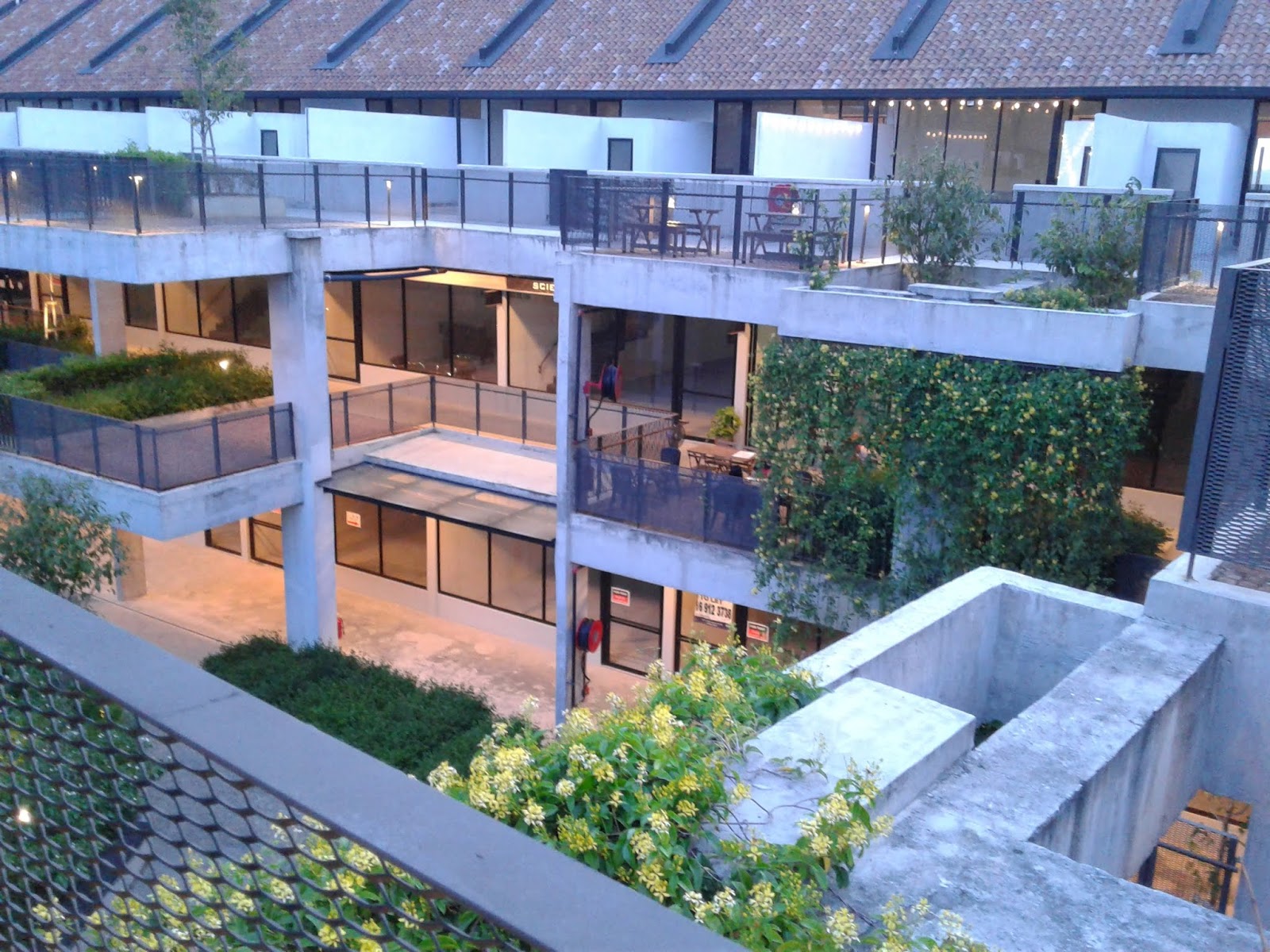
About a year ago, a business colleague from the UK had a meeting in Cyberjaya. His feedback: "A bit of a ghost town". And this week I actually joined friends (with a car) for dinner there. In fact we were visiting a new development, which my pals had worked with. And it was pretty nice! Opened only about a year ago, Tamarind Square is a complex of interestingly designed boutique office and shop spaces - I would say mainly catering for SMEs, although there's a larger retail area with a flagship (?) grocer's, 24-hour bookshop, and other stores. The entire space is bound together by gardens and walkways with creepers. There's a great new-community feel to the place, and I can imagine a smart, young crowd working and collaborating there - with hipster cafes, al fresco eateries, and yoga spaces on hand. Currently however - and OK, this place is pretty new (and not entirely complete) - it is a bit of a ghost town too.


So what happened to Cyberjaya? Well, I didn't get to explore the whole area, but from our drive to Tamarind Square, it seems a lot still is under construction. And to be fair, 1997 saw the onslaught of the Asian Financial Crisis - which was tough for many nations and saw this project being propped up by government. There are tax incentives, and almost no restrictions on foreign talent if you set up in Cyberjaya (as a foreign company?) and I've read that many big globals (IBM, Wipro, BMW etc etc) do have a presence there. And the district is apparently profitable. But it still has that ghostly air. 

Kuala Lumpur and suburbs also still suffer from inadequate public transport. And while the cleaner air of Sepang might appeal, it turns out there is currently only one train station to serve both Cyberjaya and Putrajaya. (And it's part of the KLIA Express - a non-interlinked line!) There are limited buses, too, apparently. But it took quite a drive for us to get from KL out to Cyberjaya - and from what I saw, a lot of the new district is quite sparse. Personally, even with a car, I would not be tempted to invest in a swish residential unit there, and would find it a difficult commute for work: it's too isolated, with not enough locally (yet) to make it worth a relocate. If others are thinking like me, then there is a chicken-and-egg situation going on. Retailers etc will move in when there's footfall. But people won't settle without amenities and retail.

My Malaysian friend had an additional explanation: Cyberjaya was too early. The government was smart to think about it, but the rest of the nation (public, workers, businesses) weren't switched on to tech, and didn't have today's fashionable entrepreneurial spirit back in 1997. So I guess the project lost brand momentum. And if anything needs sparky, up-to-date and forward-looking brand momentum, it's probably tech/R&D. There is also national government support for the majority ethnic group in Malaysia, which (it has been argued) discourages the survival instinct which could be applied to other visionary projects in this region - Singapore as a whole country might fall into this category! - and gets the workforce behind national growth and eventual success.

There are probably 110 other things to consider in Cyberjaya's story. But I really hope that it does become a successful R&D hub, or ASEAN Silicon Valley. Two new MRT stations are set to open in the next five years. That would be a (n overdue) great step in the right direction imo. And who knows, maybe today's creative, entrepreneurial, yoga-loving, crowd will be part of the solution, too? 


Here's some blurb: 
Cyberjaya Malaysia
Tamarind Square 


* Jaya in Malay means 'success' and is applied to countless towns, districts (even stores) across the country. I guess for good luck.


Wednesday, 20 December 2017

Japan: And the Kanji of the Year is...

Discovered (and actually understood!) at a Japanese language event last night - Japan has a Kanji of the Year. Kanji are the Chinese-style characters used as one of Japan's writing scripts. 

This accolade is a modern invention, set up in the 1990s by the Japanese Kanji Proficiency Society, apparently. A nice piece of PR by them! And I guess it works especially well in Japan, where (unlike in the West, for example) written characters are not only practical words, but used in calligraphy as a respected and nuanced visual art form. Calligraphy also has connections to Zen Buddhism.

The Kanji of the Year is awarded in December each year, based on votes for the most used or topical one encapsulating the previous 12 months. The topical aspects might relate to Japanese or world events. The annual announcement takes place at the famous Kiyomizu-dera (Kiyomizu temple) in Kyoto, where a calligrapher priest will create the word on a large scale. 

2017's Kanji of the Year was   (kita = North) reflecting global and national concerns over developments in North Korea, and some natural events in Northern Japan.  In 2016 and 2012 it was   (kin = gold or money) due to Olympic successes, financial changes and other world events. 2015's Kanji was (an = safety) echoing world terrorist attacks and new laws in Japan.


Photo credit: theguardian.com/AFP/Getty


Tuesday, 25 July 2017

Isetan's new concept in Kuala Lumpur: 'The Japan Store'

For those who haven't come across it, Isetan is a Japanese department store with branches worldwide. There used to be one in London, even (I'm not sure if there is still? I think there are plans to relaunch one there). Like its other half, Mitsukoshi, Isetan is a regular department store, but selling quality Japanese products as well as global brands. 

Click on photos for slide show
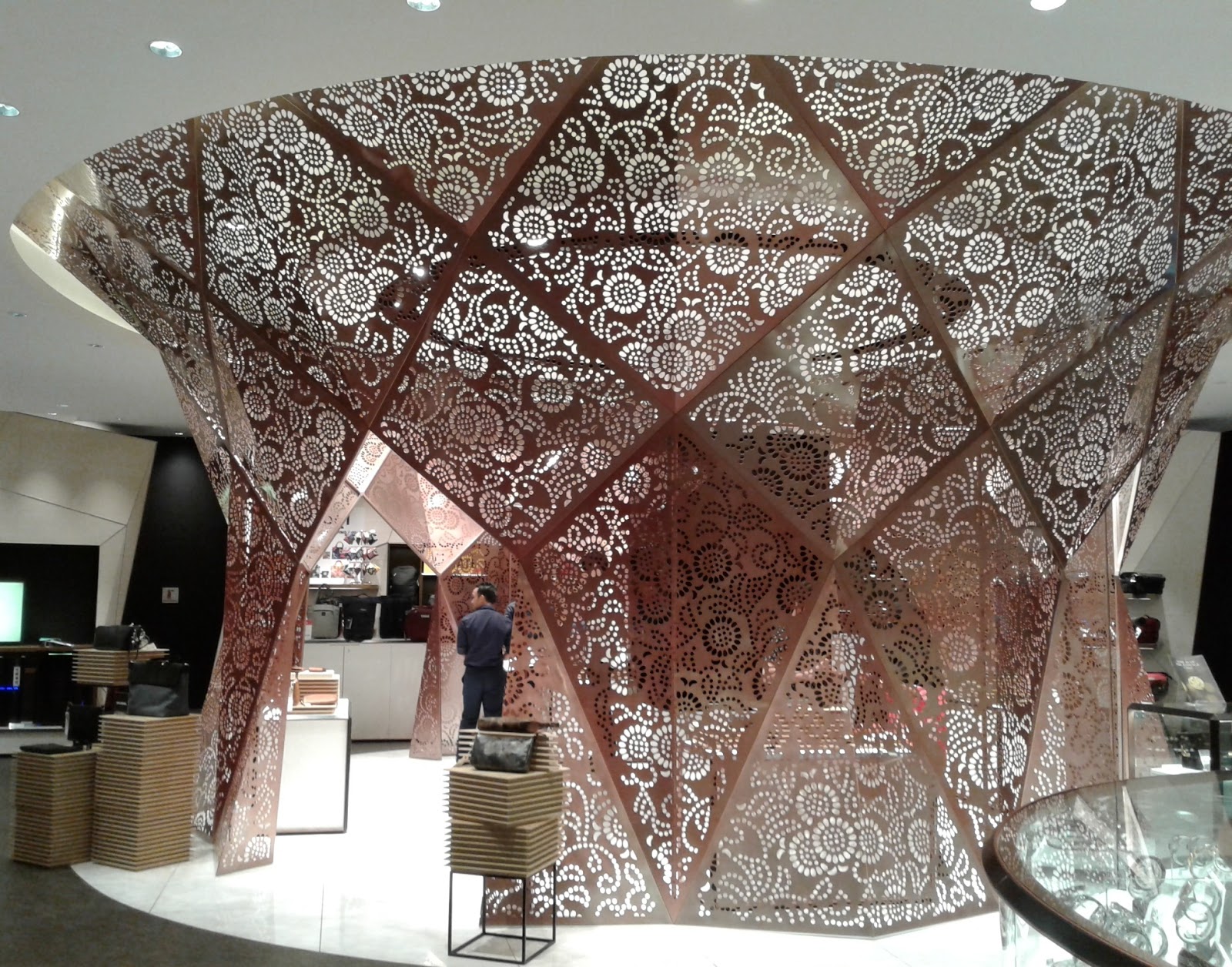
So I was quite surprised to visit the old one in Kuala Lumpur's Lot10 mall recently. This Isetan has had a major refit, and rebrand! Labelled 'The Japan Store' the new version shopping experience was a bit of a treat to walk around. Each storey of the building was named and themed, concessions were situated in artsy pods reminiscent of The Serpentine Gallery's summer pavilion commissions. There were hipster cafes, breakout and work areas. Products were arranged and curated more like an art gallery than a department store. On the top level are Japanese restaurants, and the basement food hall is now a very Japan affair, with exclusively high-end Japanese foods, eateries, drinks and liquor. It was like walking into a nicely designed store IN Tokyo. (And I have to say, after a dearth of anything affordable and fresh/unfried in KL, I was delighted to find a healthy Japan-style salad bar there too!) 


Interestingly, there is more than one Isetan in KL, and the others are still regular department stores. So this one is a specific flagship, and I would guess set up to differentiate the brand from the plethora of identikit mall anchors around the city. The Lot10 store itself is in an odd location - it sits back, on the edge of Bukit Bintang's retail strip, in what is by Asian standards an 'old' mall (generally viewed as 'less desirable' over here). A new MRT has just opened nearby-ish, but the real draw of this area seems to be the outsized, dull and flashy Pavilion Mall complex at the other end. Perhaps this is why Isetan chose to refurb this particular branch? To give people a reason to walk the extra metres for a uniquely Japanese experience - rather than just bypass Isetan entirely while heading to the flash? The other large (and far more prominent) stores in the Lot10 mall are Zara and H&M, however. Which surely pull in not-so-style-conscious youngsters with limited cash. So I don't think this ready-made footfall would be of much use to Isetan! 


My query is whether this fab new concept store actually sells anything. Or perhaps high-sales are not its primary objective?? (Can this be the case in retail? Could retail space be so cheap in KL as to support an almost pure 'branding exercise'?) The new store is beautiful and classy, but the items scarce, and pricey. It was nearly empty when I visited (on a Thursday late afternoon). Even the cafes were quiet. Japanese products and style are more respected and fashionable in SE Asia than in Europe, for example. But I'm not sure with the same groups who would also have the incomes to regularly shop at this store. Japanese expats - with both the cash and inclination to frequent it - would be an obvious market. But there is only a tiny number of them in Kuala Lumpur, especially compared to somewhere like Singapore, where there is no 'Japan Store' flagship like this. So, I'm still curious as to 'why Lot10, KL'? 

Anyway, if you're visiting KL's Bukit Bintang area, it's worth a look. 

Wednesday, 24 May 2017

Classic British 'soaps' and the TV Dinner

'Soaps' is short for 'soap operas'. I'm not sure if the term is used universally, but it refers to long-running drama series. Soaps are a similar concept to Japanese 'doramas' or K-dramas. I think the nickname arose because in the past these dramas were often inter-cut with TV ads for soaps and detergents. 

The UK is famous for its 'soaps'. Some of them have run for decades, covering all sorts of contemporary social evolutions, and are well-known parts of British culture! Soaps are usually characterised by not-so-realistic storylines, being easy to watch/listen to (quite addictive!), and often broadcast during family viewing/listening times. 

Most British soaps are based in working-class communities. And they often clumsily try to weave  topical social issues (divorce, homosexuality, racial issues, bullying, homelessness etc) into their storylines. In later years, a lot of soaps also started to introduce ridiculous plots (murders etc!) to get higher ratings. Soaps are often broadcast on several days each week.

A classic UK trend during my childhood was to eat a 'TV dinner'. This means eating your evening family meal (often on trays on your laps) while watching a soap together. The main shows were screened at about 7pm = dinner time!

Tbh, I haven't watched any soaps since I was a teen - but here are some well-known UK ones. If you are not British, note the regional accents...

1. Coronation Street (known as 'Corrie') - TV
This series is set in the North of England, in a fictional town called Weatherfield. The series has been running since 1960! It covers the lives of local residents, who often congregate at a pub called the Rovers Return. There are elements of humour in Coronation Street, but on the whole the storylines tend to be depressing to watch (this is a trend with UK soaps!) 


2. Eastenders - TV
This soap began in 1985. It is focused on a fictional place in the East End of London, called Albert Square. It features the lives of local cockney residents, who often congregate at a pub called the Queen Vic. (Seeing any similarities here? ^^)  This show also has lots of depressing storylines, and some of the most miserable are traditionally screened at Christmas! (Happy happy!)


3. Emmerdale - TV
This one is set in a fictional, rural farming community in the North of England. It used to be called 'Emmerdale Farm' but in the late 80s, it got a trendy makeover to boost ratings. Suddenly it became a lot more 'racy' and glamorous! And while sleepy Emmerdale Farm was screened on weekday afternoons, the new version has a later, peak broadcast time. Emmerdale Farm started in 1972. 


4. The Archers - Radio 
Is set in a farming community in the English Midlands. The first episodes were broadcast in 1950, and it is the world's longest-running soap. The storylines cover (clumsily portrayed!) topical social aspects, farming, and the relationships of residents of a fictional, rural town called Ambridge, where the Archer family lives. The storylines are more lighthearted than those of Corrie or Eastenders! The show features characters of all classes.

The Archers was first introduced to encourage farming after WWII, when Britain needed to boost agriculture. It's just a regular drama now, though I think it might appeal to older generations than some of the other UK soaps! 


My grandmother and mother used to listen to The Archers. In our household, the weekend Omnibus edition would often be on the radio while traditional Sunday lunches were being prepared :)

Listen: http://www.bbc.co.uk/programmes/b006qpgr/episodes/player


Honourable Mentions: The Aussie Soaps
Aussie soaps Neighbours and Home & Away were HUGELY popular in the UK during the 80s and 90s. I am not sure if they're still being broadcast there? These soaps were altogether more sunny and cheerful than the UK ones, and were screened at about 5pm. They were an absolute must-view for housewives, and most University students!


Other Classic UK Soaps
  • Hollyoaks (1995-present) - unrealistic lives of a group of plastic young people in a fictional town near Chester in England. 
  • Brookside (1982-2003) - depressing drama featuring the residents of fictional Brookside Close in Liverpool. The close (a group of houses) was actually built in real life, and the series was filmed there.
  • Crossroads (1964-1988 - resurrected briefly in the 90s) - low-quality drama set around the fictional Crossroads Hotel in the North of England.


Saturday, 24 December 2016

Christmassy Things: Carols

Yep, these are old, festive songs. Usually, but not always, Carols have a religious theme. They are not the same as 'Christmas songs' - tunes like 'White Christmas' were created in the 20th century, and are (for now anyway!) something more commercial. 

Most Carols go back much further, and were popular songs maybe 700 or 800 years ago! Some were originally folk songs. A lot also appeared in the 19th century, and even a couple in the 20th century, written as religious songs by famous composers - but I am not sure if these are very popular generally. Some of the old Carols were shared across Christian countries, with translations into various local languages. 

Carols are also Hymns (religious songs) but they are special, because they are for a specific festival. In fact the earliest Carols were Roman, and sung as far back as the 4th century, and apparently a couple of old Easter Carols also still exist. (I have never heard either.)

In the UK, you will hear Christmas Carols sung by choirs (for religious, and non-religious performances) and by congregations in Churches over the festive period. There is also a tradition of 'Carol Singing': groups of people who practice singing the songs well, and perform them in public spaces, or door-to-door, to collect money for charity. Carol Singers are called 'Carolers' in the US.

Here are some famous Carols in the UK, with their origins: 
  • Good King Wenceslas (English, based on a Czech story)
  • Ding Dong Merrily on High (English)
  • Silent Night (Austrian) 
  • O Little Town of Bethlehem (American)
  • O Come, All Ye Faithful (maybe English or Portuguese) 
  • Hark! The Herald Angels Sing (English) 
  • The Holly and the Ivy (English) 
  • Zither Carol (Czech)

Most Christian British people are very familiar with these Carols, because we used to sing them at school, or hear them frequently in town centres, on TV etc. They are not very cool or hipster, but a lot of them are happy and enjoyable to sing! My family used to go to the Church service late at night on Christmas Eve, and enjoy singing as part of it. 

The larger Churches, Cathedrals and Abbeys, also have their own choirs - including very young boys singing soprano/alto called 'choirboys'. The latter is a very odd tradition, when put in modern day context especially - I am not sure when or why the idea of choirboys originated (I suspect to eliminate the need for female singers!) but they are an old fixture of the Christian Church. Having said this, I sang in a choir (of adults) in London many years ago, and we had one session joined by the Westminster choristers (choirboys from the Westminster Abbey Choir - which is very famous). They were young boys, but extremely disciplined and well versed with music. They sang most of our choral piece perfectly, just by reading the music for the first time! 

Here are two of my favourite Carols: The Holly and the Ivy (sung by King's College Choir), and Zither Carol (sung by Westminster Abbey Choir):


Happy singing, and Merry Christmas! 

Photo:  "Carolers at the Door" by Charlotte Joan Sternberg

Saturday, 17 December 2016

Christmassy Things: A Christmas Carol

This is a story, and it has become a tradition to play it out over the Christmas season. The original was written by English author Charles Dickens, and first published in 1843. It tells the tale of a miserly man called Ebenezer Scrooge, who is visited by three ghosts - past, present, future - which eventually teach him the morals of compassion, generosity and goodwill. These are Christian traditional values, especially at Christmas time - although Dickens added his own socio-political angles to this story, which have now partly become interwoven with our modern Christmas thinking. 

There are actually dark aspects to this story - but today A Christmas Carol is usually portrayed in a fun, family way - and despite the ghosts and messaging, is not spooky or upsetting. There are many different ways to enjoy the story today besides reading the book - adaptations for theatre, TV, animation - even The Muppets have done a version! 

Despite the title, I don't think there are any real Christmas carols in the original story. (A carol is a happy religious song traditionally sung over the season). I think Dickens referred to a 'carol' as meaning a sort of moral tale. A Christmas Carol is so well known that the word 'Scrooge' is now part of the English language, referring to a person who is mean with money. And his catchphrase 'Bah, humbug!' (meaning 'nonsense!') is also famous.

On another dark note, in the modern day, there have also been criticisms of anti-Semitism in this story, due to the first name of the main character, who was probably supposed to be Jewish (which of course means there would be no factual reason for him to celebrate a Christian Christmas either!) And although hopefully we're encouraged to sympathise a bit with Scrooge later in the story, Dickens was a complex man who reflected some - for the 21st century at least - uncomfortably xenophobic / colonialist thinkings in his writing, as well as some progressive ones. This only struck me when I started writing this post today and thinking about the characters' names, as an adult. Of course the story is 170 years old. But sometimes it is worth remembering the era and sources from when/where traditions originate. Few things are 'neutral' even though we often grow up accepting them as such; and luckily today our understanding is more global :)

Anyway, while keeping that background aspect in mind, there are still some positive messages in this old story. Here is the trailer for The Muppets' version (which is also quite  old now!) starring Michael Caine as Scrooge - and this does involve plenty of singing: -


Tuesday, 13 December 2016

Christmassy Things: The Nutcracker

This is a ballet. And it is a traditional Christmassy one to watch in Europe and N America (and I am sure elsewhere as well!) Most ballets have fairly simplistic stories, and this one involves Christmas Eve celebrations, and various gifts and things coming magically to life that night (as witnessed by a little girl). Its origins are French and Russian. The story is adapted from a tale by Alexandre Dumas. The music to go with it was written by Tchaikovsky. The full ballet was first performed in St Petersburg in the 1890s, but apparently only really became popular in the West during the 1960s. 

A nutcracker is an implement used to crack nuts (funnily enough!) and the one in this story was carved to look like a person. Nutcrackers used to be especially associated with Christmas because, in Europe in the 1800s, nuts were traditionally a special/exotic thing to eat for the season.

Two of the well-known scenes in The Nutcracker are The Dance of the Sugar Plum Fairy and The Nutcracker Tea - and you might recognise the music. Several pieces of music became famous from this ballet!

I have seen two performances of The Nutcracker, a traditional one in Singapore, and a more contemporary version in London. The latter was choreographed by Matthew Bourne (who is also famous for introducing an all-male Swan Lake!) 

In the UK, ballet has generally been seen as an upper class or 'high-brow' thing to watch live. Inaccessible to most people with normal incomes, and possibly quite dull for those who don't want to watch it for tradition or 'class value'. For some decades various authorities have been trying to change this perception and I think that there are many performances today which are both affordable, and with variations on the traditional style. Personally I am normally not crazy about ballet as a performance (and have watched it because I got free tickets through work!) But in addition to the famous music, The Nutcracker can have some great, colourful sets and scenes. And there is something very festive and atmospheric about the occasion itself - getting dressed up to visit the theatre, and doing something special for the Christmas season :) 

Here is The Dance of the Sugar Plum Fairy, in traditional style with the Mariinsky Ballet, and also Matthew Bourne's version of The Nutcracker Tea. (You can also watch the entire Nutcracker ballet on YouTube if you search for it!)


Sunday, 4 December 2016

Giant Chalk Figures in England

Oddly enough, across the UK, there are several huge, white figures carved into hillsides. Some are thousands of years old, maintained to this day. I grew up knowing these depictions and not really thinking much of them. Now that I'm overseas, I think they're a bit strange. And interesting! 

Most original figures are horses, and giants. They are white, because they are carved through the grass into natural white-chalk hills, which mostly occur in the South of England. Sometimes the outlines were also filled with chalk to brighten them. There are around 24 old figures across the country in total, apparently. And of course others have been lost with time (some more recently discovered with infrared photography).

FYI in modern times, the hill-carving technique is occasionally used for branding and publicity stunts too. So if you happen to see a giant white Kiwi, or Homer Simpson - be warned, these are not old English monuments!

Why?
It seems the original figures were probably Celtic (an ancient pagan culture, which was in the UK from many years BC). Horses were definitely worshipped by the Celts, and the very early chalk figures were possibly images of their gods. Later horses might have been Saxon and political, as these invaders' war banners depicted the white horse. Over time, some figures were re-cut to make them look more contemporary, and parts were lost or changed. Other figures are relatively new (16th -19th century) and it seems were made to emulate the famous figures seen elsewhere in the country. 

Here are four of the good ones - just in case anyone out there is visiting England!

1. The Uffington White Horse in Oxfordshire still has something close to its original, Celtic shape. It is probably over 3000 years old, and the oldest chalk figure with a relatively traceable history! It is situated near the ancient, Iron Age, Uffington Castle. The horse is 360ft (110m) long.


2. The Cerne Abbas Giant in Dorset, is over 180 ft (55m) tall. His entire history is unknown; some theories say he depicts, or was re-appropriated as Hercules during Roman occupation, to reflect their own culture, and possibly also as Priapus (a Greek fertility god). Others that he was even a more recent parody of Oliver Cromwell. He's also situated near a famous, Iron Age, site, which perhaps suggests far more ancient origins. Generally, however, (and perhaps not surprisingly!) he is considered to be a fertility god. Even today, there is a view held by some that if couples spend 'snuggle time' there, their marriages will be blessed with children!


3. The Westbury White Horse, in Wiltshire, also has an unclear history. Tradition says it relates to King Alfred's nearby victory in 878 AD, but there's no actual record of the figure until 1742. It seems several horses were cut and re-cut into this same hillside over time, so he probably didn't always look like this. The horse is 170ft (52m) long.


4. The Long Man of Wilmington, East Sussex, holds two staffs, which reminds me of Scotland's Burryman*. The Long Man is 235ft (72m) tall, but again, his exact history is hard to trace. Theories suggest he might be either neolithic (a LONG time ago!), or much more recent (16th or 17th century AD) when he might have even been a satirical figure. Some also believe he has fertility connections. Today he's made of whitened bricks, put in place in the 19th century, as the original figure was apparently quite faint. Some experts suggest that the figure originally wore a war-helmet, and so the staffs might have been weapons. Nobody knows for sure. But he's an impressive sight, either way :)


Further reading on this blog:

Bonkers British Festivals no2: The Burryman 
Bonkers British Festivals no1: The Ottery Tar Barrels


Monday, 24 October 2016

My Fave Horror Movies - East & West (distilled!)

It's that time of year. Yep, if there is not enough horror for you on the current world political stage, scary films are also springing up for Halloween. 

I've always been a huge fan of horror movies. Not gory / slasher / torture or zombie movies - but a cleverly crafted film of suspense and 'eeek!' factor is such good fun! It needs to be fun. And although many horror flicks have (deliberately?) ridiculous/hilarious/generic plots, some films actually do offer genuinely fascinating twists at the end too. 

Asian horror film masters are Japan, which brought us masterpieces of their time such as The Ring, Dark Water, The Grudge (not to mention a large number of a-bit-too-disturbing numbers such as Ichi the Killer and others). Like other Asian horror flicks, a lot of Japanese films have been remade in the USA, to varying degrees of effectiveness. I haven't included The Ring and co simply because they have now become so parodied they're no longer surprising. South Korea also has made some goodies (The Doll Master, The Tale of Two Sisters, stand out, then on the 'too-disturbing' spectrum, Oldboy, Lady Vengeance, etc). And Thailand also has a good offering, The Eye was originally Thai, as are several other US remakes. 

In the West, well, obviously the well-funded US movie industry has given us many great horror films and horror film franchises: classics like The Shining; personally I quite enjoy the Paranormal Activity series for fun value; Insidious was surprisingly interesting; Drag Me to Hell fun and tongue-in-cheek. In Europe, my personal experience is that Spain makes some really good horror flicks. The Orphanage is worth a look, I even enjoyed (sort of) zombie movies Rec and Rec2 when handled that well (haven't seen 3 and 4 yet).

But if you have just an evening at home to watch horror this Halloween, and also want something a little bit brain-challenging with your popcorn, my recommendations are below:

1. Identity (USA, 2003)
I can't give too many spoilers here. But when it was released it got me and my family talking about it for quite some time afterwards. It's a really clever film - just watch it!


2. Shutter (Thailand, 2004) 
You need to watch the Asian original. This film is a lesson in how clever plot and smart suspense can trump fancy effects and budget. I don't think there are any big bucks scenes in this film, but it will keep you gripped and hiding behind your pillow throughout. With a very good reveal at the end! 


3. The Others (USA/Spain, 2001)
A seemingly long-winded, eerie, period movie with Nicole Kidman doing a good job in the lead. Stick with it to the end, however! The Director is Spanish, and this film has more of a European feel than American, I think. 


4. Battle Royale (Batoru Rowaiaru) (Japan, 2000)
Tbh I am not sure I'd put this into 'horror' but maybe just 'drama'. Though it is quite disturbing - not because of pointless torture or gore, but  as a kind of observation of society. At the same time it's vastly entertaining, in a kind of worrying way! I won't throw in any spoilers, but if any of it  seems familiar, bear in mind this was actually released 16 years ago! 


Honorary Mention: Poltergeist (USA, 1982)
This is just plain fun, and it is still one of my favourite films of all time. Directed by Tobe Hooper, with Spielberg writing/producing, it's got an easy-to-watch, slick, almost comforting, Hollywood finish - but all sorts of weirdness happening too. Carol-Aaaaaan! 


Happy screaming! :)


Tuesday, 2 June 2015

Pseudo-ku : the curse of the 'intellectual'

I was interested to note in a recent Harvard Biz Review article, that it’s been proven that those with very high IQ, are strongly disposed to lack EQ (emotional intelligence – ie ability to be socially and emotionally aware) - and thus need different management techniques. Basically, it was telling us how to lead nerds. And to be brutally honest, there does seem to be a very high frequency of nerds in Asia. I am not sure why this is (OK I suspect it has a lot to do with developing economies, cultures with strong parental controls etc). But that strange, small species of (usually) males who we thought were peculiar, dull and one-dimensional as we cavorted and experimented aged 18 at Uni in the UK, are just ‘regular guys’ in Asia. And there’s a strong chance that the ones at Uni might have actually been from Asia too..  Low EQ is not very popular at University, or with girls – though a very high IQ might be valued in some industries later on, regardless of social skills. Hence the management advice.  

What does seem to be thankfully lacking in Asia however, (or at least in Singapore and Malaysia, where I have lived so far) is the pseudo-intellectual. People over here in Asia more commonly train in ‘useful’, traditional science subjects like engineering. And the popularity of things like art history or philosophy are just not the thing. Yet. And while science-y subjects can attract/breed nerdy, not-great-socially types, the pseudo-intellectual (or simply ‘pseud’) is another kind of social ineptitude which goes with beard-scratching* arts and humanities subjects. (I know this; I went to art school and architecture school, then spent 10 years working in contemporary art!)  

The pseud is the person – usually under 24 years old – who will ambush you at a party and bore you senseless as they launch into a diatribe about Heidegger, Kerouac, the ‘meaning behind their work’ (if they’re an artist) or try to compete with you about conceptual thought or analysis in film/philosophy/literature etc etc. Even if you’re in the middle of enjoying a shandy, and have not expressed the slightest interest in their views on Heidegger or any of the aforementioned.  The subtext from the pseud is often that they're slightly intellectually superior to you (and thus impressive and more cool) if you don’t spar, are not interested in sparring or don’t know who Heidegger is. The real subtext is that they’re immature and lacking in EQ. What might have a place in a crit** or seminar discussion in class, is not necessarily appropriate at a BBQ, or to chat up a date. And that insensitivity stands, regardless of whether you’re boring someone with physics or philosophy. (The difference with the pseud is that unlike the nerd, he/she might not also have a high IQ.) 

Artist pseuds - and this happened A LOT among the amateurs at art school - might go a stage further and actually commit ‘shocking and attention seeking acts’ in order to showcase their intellectual superiority. That ancient adage that notoriety will bring you real fame or respect. I think this is vaguely catching on with some artists in Asia now, actually! *sigh* (Incidentally, the really successful living artists are generally shrewd marketers and business people, not simple attention-seekers, although they might brand themselves that way.) 

Anyway, thankfully, once you're out of college years in the West, pseud numbers start to dwindle rapidly. And given the choice today between a nerd and a pseud, I might well opt for the nerd... or hurling myself into the BBQ pit. In the interim am very happy that the pseudo-intellectual is not yet omnipresent in Asia.


*Beard-scratching, or beard-stroking, is a mocking term referring to the actual act of scratching a (usually goatee) beard, by a pseud, while in ‘deep and meaningful’ thought. 

**A crit is part of art and architecture school training – where you stand up, present and justify your work to a panel of tutors.

Wednesday, 6 May 2015

Two Alleys

In London, and most towns in the UK, you would never walk down an alley. Day or night, really. Unless you know it very well and are possibly armed with a bazooka. Alleys are generally home to perverts, drug users, weirdos... It's not where you want to be! Singapore, however, is a bit different. And one day recently I explored two new alleys.

Alley 1
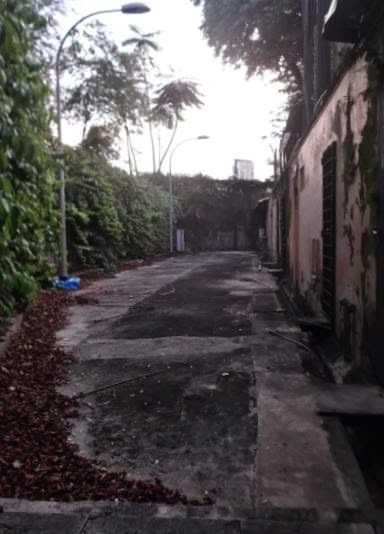
What and where: A Murakami-esque mysterious lane near my house. I pass it every day, had always wondered what was up there - or where it would lead. 
What was there: Some plants, back doors, storage spaces. It leads nowhere (ending in a small concrete yard). You couldn't fit a car up there, it's just a regular blind alley. But I find it oddly charismatic in its own way! (Click to enlarge pix)


Alley 2

What and where: some place in Kampong Glam in Singapore at about 11.30pm. Just a regular alley, no reason to have been down there before (we hadn't!) 
What was there: This. I love this! Actually it was part of a whole series of art installations in the area that night; but this one was by far my favourite. (What, I hear you cry! - a light / video installation without feedback, or 'difficult' rumblings and scrapings as soundtrack?! Yep.)


Thursday, 5 February 2015

My Movie Top Ten East & West (for now!)

I was having a chat with a friend about good movies the other night. And realised I have favourites from across the world. Here are ten I would recommend for starters, with trailers, in no particular order:


1. Mongol (Mongolia / Russia / Kazakhstan / Germany)
2007 film about the life of Genghis Khan. A kind of combo between an interesting National Geographic documentary about Mongolian life, with amazing Lord of the Rings battle scenes. And a brilliant soundtrack with Mongolian throat-singing! (Sorry about the Americanisation of this trailer; the movie isn't. Try to find film in original Mongolian with subs)


2. 12 Angry Men (USA)
A black/white film from the 50's by Sidney Lumet, this first had me sceptical. It's about a jury process, and once you're in, it's a completely gripping tale, with twists and turns as the argument progresses between the 12. 


3.Survive Style 5+ (Japan)
Bonkers, but highly enjoyable (and oddly, sometimes rather moving) film, featuring a series of crazy vignettes. I think the director was a pop music video director, and this fun aspect comes across, as well as some really impressive and colourful sets.


4. Shutter (Thailand)
The 2004 Thai original of this horror. Really clever story, and executed cleverly for maximum 'eek!' factor, despite a relatively modest budget. 


5. Tonari no Totoro [My Neighbour Totoro] (Japan)
There are a LOT of Miyazaki animations which I love. But if I had to pick one favourite it's probably this. This is a sweet, magical story and a sensitively animated film; with a lovely peace and pace about it which you don't often find in Western family animation. Ditch the dub and go for subtitles on this.


6. The Mummy (USA)
Love this movie! It's so underrated! The other Mummy movies were pants, but this first one is just incredibly good fun - with an intelligent cast, who were clearly having fun making it too. Lots of little humorous moments in there; I've watched this film to wind down and cheer me up many times! 


7. Festen (Denmark)
1998 story of a patrician family reunion, where some home-truths are outed. Fascinating and intelligent insight into human / family behaviour and class. 


8. Detroit Metal City (Japan)
Completely ludicrous, hilarious and OTT movie adapted from a Manga. Starring the brilliant MatsuKen as the uber-nerd-heavy-metal-rockstar. If you can find this do try to watch it! 


9. Ong Bak (Thailand)
Tony Jaa and this movie must have been personally responsible for thousands of youngsters taking up martial arts worldwide - not to mention making Thailand incredibly cool overnight! It's a fight movie, the first and best Ong Bak, with some breathtaking action sequences. 


10. Gladiator (USA)
Another fight movie (of sorts) but set in ancient Rome. Was blown away by this when I first saw it, and still am. Just a really well made story of politics, with a solid cast, great visuals, action and some really good lessons in leadership!  


Happy viewing!


Friday, 5 December 2014

Painted bamboo shop blinds & the 'Five Foot Way'

These blinds are a total throwback to my early childhood, when we lived in a medium-sized town in Malaysia. The main streets were festooned with illustrative blinds, painted in a slightly naive style I really love now. The purpose of the blinds was purely practical, however. Firstly they were to provide shade for shoppers along the 'Five Foot Way', and keep the shops themselves cooler. Secondly they doubled as advertising hoardings - for the vendor's name, or a full ad for a sponsoring brand. I clearly remember jolly, painted, toothpaste ads - complete with the product, toothbrush and a smiling lady (wearing a slight beehive and appropriately retro fashion). But the paintings could depict - usually packaged - products of any variety. 

In the old 'Chinese shophouse' style of architecture (which you can see even now throughout South East Asia) each street had rows of ground-level shops, separated from the road by both a deep storm-drain, and a covered walkway, which allowed people to move to-and-fro without expiring in the scorching heat. The walkway was roughly Five Feet wide, hence the name. When I was little, additional vendors would set up tiny stools or stalls selling trinkets and other items in the Five Foot Way itself. I used to love these - there was bling galore, a huge attraction for a small child! 

So anyway, the bamboo blinds hung on the outside of the Five Foot Way, thus shielding people from both tropical sun and rain. Some blinds had 'gaps' cut in them, so that shoppers could pass into the street at intervals. I can't find much information about these features, and so I have no idea when the blinds became popular, or the corresponding painted ads. But I'd make a guess at early-mid 20th century for the ads at least, and judging by the fashions depicted, there are still a few in existence from the 60s and 70s. (If anyone knows more - please comment!) 


It's rare to see originals of these delightful commercials now. I am sure they existed in Singapore as well, but have yet to see one after three years living in the city! You can still find a few in the smaller towns of Malaysia, however. And today's modern 'hipster' movement in places like Penang and Ipoh is also restoring and emulating them in a contemporary context. And although I agree that every city needs to develop and keep economically sound, I still have a great fondness for the old originals that remind me of childhood!

I found these examples on a recent trip to Ipoh in Malaysia. Most are originals, and there's even a sign-maker advertised in one of the photos - I wonder if he, or someone in his family, was once a painter of these lovely old ads?  [You can click on the photos for a larger slideshow - picture formatting is a disaster on Blogger, as usual, sorry!]


Friday, 28 November 2014

Tattoos and Lost in Translation

Remember the Western celebrity trend for having tattoos done using Chinese and Japanese characters (also Thai, Sanskrit and other languages)? Britney, P!nk, Angelina, the Spice Girls' Mel C all have them. And I noticed some years ago that this trend was catching on around London as well. Why not, it looks cool, right?

Cool, until a friend from Beijing  pointed out to me with some amusement, that the girl at the table next to us had a tattoo on her arm which meant 'Ladies Toilet'.

And this is the thing. I have a very rudimentary grasp of written Chinese and Japanese, but even EYE know you can't translate things literally. How you combine characters matters! Every modern language has nuance and colloquialisms, and in fact the whole way of thinking behind Japanese and Chinese language systems is completely different from Western languages and thinking. So you can't just pick up a dictionary and translate things word for word. You need to know how the language works to convey the meaning ...and also how these characters might be read in the modern context. It's like my Japanese friends who keep saying 'I will meet you around the backside'. This makes perfect sense, logically - it is the back, side of the building. But in everyday British English backside only has one real meaning: somebody's posterior! 

And the same for this poor girl's tattoo.  is a Chinese character meaning 'woman' or 'female'. But in everyday Chinese - and you see this here in Singapore too - it is the sign for Ladies Toilets!


There has also been controversy over some celebrity tattoos - which look great but have no or confusing meaning in the Asian language they're supposed to represent. Tattoos are kind of a permanent thing. And you would think that (especially if you're a wealthy celebrity) it would be worth getting a proper translator on board before actually committing to the design! 

Meanwhile, I welcome any input from Japanese or Chinese speakers as to whether Mel C's tattoo (below) really means 'Girl Power' - or not!