Showing posts with label Marketing. Show all posts

Friday, 19 October 2018

Don Don Donki

This opened recently in Singapore, and it seems caused quite a stir. Partly because it was handy, cheap and from (fashionable) Japan. And partly because there were sex-toys openly on sale. According to the media. I don't think they are on sale now.

Don Don Donki is a price-friendly Japanese supermarket. Selling mostly Japanese things (it seems from quite a wide range of products!) And, I think, like its contemporary (the wonderful, relatively sex-free) Daiso, probably set to be hugely popular across SE Asia.

As for the toy debacle, I didn't see them personally (and was overseas when the news controversy broke!) so I can't say how indiscreet they were. But apparently they were portable and for men. And tbf to Singapore, subtle Durex toys are on sale across the nation state's 7-Elevens and pharmacies; it's not hyper-prudish. So was the indecorous story deliberate PR for the Don Don Donki Singapore launch? This seems less likely in conservative Asia. But the store has been a major hit with Singaporeans either way.

I finally got to visit this month. And it was quite nice. Packed to the rafters with decent quality, affordable Japanese things (groceries, pharma etc in this branch). Of course most packaging is in Japanese, so there's an air of mystery for non-readers. But we purchased some ice-cream items which turned out to be ridiculously yummy - hoorah!

In fact this chain - named Don Kihōte (ドン・キホーテ) though apparently known as 'Donki' there - is Japan's largest grocer. It was rebranded Don Don Donki for Singapore, the phrase taken from the store's own theme song "Miracle Shopping" which was even released as a single in Japan. There are some other Donki brands under the (it seems huge) Japanese umbrella owner, the Don Quijote Group. The original chain (initially called Just Co) has been around in Japan since 1980.

Anyway, here's a video I took in the Singapore store - which we first rummaged around quite late at night, as this supermarket is open 24 hours.


Something 'mikan' (tangerine) melty, mild orange-choc segments filled with ice-cream. Lux.
Matcha (green tea) Mini Milks. Bloomin' yum.


Also on this blog:
Donkey surprise! And the UK case of the bogus burger..
And in your mall this afternoon...


Tuesday, 28 August 2018

Cyberjaya

This is Malaysia's purpose-built, hi-tech town and science park. At around 30km², tech-enabled Cyberjaya is situated in Sepang, on the outskirts of Kuala Lumpur, anchoring the country's so-called Multimedia Super Corridor.  The town was launched in 1997 with the aim of establishing Malaysia as a go-to/vibrant hub for, well, technology, science, and R&D in ASEAN - and, later on, globally.  (Cyberjaya was created alongside Putrajaya* - a new hub for government.)

Tbh, this seems pretty smart to me. As time has told, tech has become a humdinger in this region (I think moreso than in the West). The agility and speed of nations in SE and E Asia is quite staggering at times; and as they develop and grow, new ideas (tech) are adopted and rolled out quickly. There isn't the cynicism of the West, nor existing alternatives or old ways. Because a lot of these countries are 'new'. So in my view, Malaysia's government (plus McKinsey) was pretty shrewd with the Cyberjaya plan.

But I remember there were lots of jokes locally in the late 90s - heard via my brother who was in KL at the time - about how Cyberjaya would never work. How it was all talk without functionality (and, it certainly seems, local buy-in). Then the place launched, and I kinda heard nothing more. I read that there was a world-class, state-of-the-art 3D movie-making facility there, and a multi-media (now outdated term?) university. But no more news.

About a year ago, a business colleague from the UK had a meeting in Cyberjaya. His feedback: "A bit of a ghost town". And this week I actually joined friends (with a car) for dinner there. In fact we were visiting a new development, which my pals had worked with. And it was pretty nice! Opened only about a year ago, Tamarind Square is a complex of interestingly designed boutique office and shop spaces - I would say mainly catering for SMEs, although there's a larger retail area with a flagship (?) grocer's, 24-hour bookshop, and other stores. The entire space is bound together by gardens and walkways with creepers. There's a great new-community feel to the place, and I can imagine a smart, young crowd working and collaborating there - with hipster cafes, al fresco eateries, and yoga spaces on hand. Currently however - and OK, this place is pretty new (and not entirely complete) - it is a bit of a ghost town too.


So what happened to Cyberjaya? Well, I didn't get to explore the whole area, but from our drive to Tamarind Square, it seems a lot still is under construction. And to be fair, 1997 saw the onslaught of the Asian Financial Crisis - which was tough for many nations and saw this project being propped up by government. There are tax incentives, and almost no restrictions on foreign talent if you set up in Cyberjaya (as a foreign company?) and I've read that many big globals (IBM, Wipro, BMW etc etc) do have a presence there. And the district is apparently profitable. But it still has that ghostly air. 

Kuala Lumpur and suburbs also still suffer from inadequate public transport. And while the cleaner air of Sepang might appeal, it turns out there is currently only one train station to serve both Cyberjaya and Putrajaya. (And it's part of the KLIA Express - a non-interlinked line!) There are limited buses, too, apparently. But it took quite a drive for us to get from KL out to Cyberjaya - and from what I saw, a lot of the new district is quite sparse. Personally, even with a car, I would not be tempted to invest in a swish residential unit there, and would find it a difficult commute for work: it's too isolated, with not enough locally (yet) to make it worth a relocate. If others are thinking like me, then there is a chicken-and-egg situation going on. Retailers etc will move in when there's footfall. But people won't settle without amenities and retail.

My Malaysian friend had an additional explanation: Cyberjaya was too early. The government was smart to think about it, but the rest of the nation (public, workers, businesses) weren't switched on to tech, and didn't have today's fashionable entrepreneurial spirit back in 1997. So I guess the project lost brand momentum. And if anything needs sparky, up-to-date and forward-looking brand momentum, it's probably tech/R&D. There is also national government support for the majority ethnic group in Malaysia, which (it has been argued) discourages the survival instinct which could be applied to other visionary projects in this region - Singapore as a whole country might fall into this category! - and gets the workforce behind national growth and eventual success.

There are probably 110 other things to consider in Cyberjaya's story. But I really hope that it does become a successful R&D hub, or ASEAN Silicon Valley. Two new MRT stations are set to open in the next five years. That would be a (n overdue) great step in the right direction imo. And who knows, maybe today's creative, entrepreneurial, yoga-loving, crowd will be part of the solution, too? 


Here's some blurb: 
Cyberjaya Malaysia
Tamarind Square 


* Jaya in Malay means 'success' and is applied to countless towns, districts (even stores) across the country. I guess for good luck.


Wednesday, 18 April 2018

Work-life-balance East and West

East Asia is famous for tough office hours and dedication to work. "The industrious East" is still a global brand, which has been upheld by the recent economic track records of places like Japan and China. Many cultural aspects from East Asia have also influenced South East Asia (Chinese diaspora, general modelling on successful 20th century practices). And there is a huge energy of growth and change in the whole region - which you don't feel in the peaking (peaked?) West. 

So, all good for Asia*, right? Well, maybe not. My observations of, and conversations about, the Asian work ethic have been unexpected... 

2015-17 was a fairly momentous time for the marketing industry in Japan. Tragically, a young Tokyo employee at ad agency Dentsu died of overwork. In fact the occurrence is not uncommon in Japan: there were apparently 84 deaths in 2016 linked to overwork. There is even a word for it: 過労死 (karoshi - overwork death). The marketing industry worldwide also has a deservedly bad rep regarding employee work and pay. Long hours for free are regularly expected - even factored into  agency business models. It used to be bad enough in Europe; you can only up the ante in Asia. But what was different about the Dentsu tragedy, was public outcry, and an open trial of company executives. Which actually highlighted working hours as a problem. And Dentsu was found guilty of breaching employment legislation. Whether the company's resulting (microscopic) fine, or alleged changes to working hours, really affect things going forward, though, who knows. It seems the death was perhaps more the result of company culture and tacit expectations. Which might not be unique to Dentsu. Or Japan.

In many parts of Asia, 'hard work' in the office does not mean the same thing it does in Europe. It means long hours. Sometimes very long hours. But not necessarily productive ones. 

There are reasons for this. For example, in many East Asian countries (and countries with East Asian influence) it has traditionally been seen as bad form - or a loss of face - to leave the office before your boss does. And your boss (who might be on a humungous salary to justify such long hours) could stay very late. So the tacit ruling is that everyone has to stay very late. It's not about productivity, or results, but a show of 'honour'. 

Japanese friends have told me that they would regularly (deliberately) spend hours during the day 'filling' time (on Facebook, having tea etc) because they knew they would be honourably in the office until 9pm anyway. Even if they had no work to do! 

My experiences in Singapore were not dissimilar. People would complain of the long hours they worked (and they often did!) but I'd note that during the day there was a lot of sitting around, chatting, smoking and doing nothing work-related. This quite shocked me, when I first arrived from London. I'd imagined the pace would be the same, but just for longer - hence 'the industrious East'! In fact the pace was a lot more laid back overall, and 'stretched out' - probably due to decades of this long-hours/late-night expectation. Even in the trendier workplaces, where more reasonable hours were apparently operated, there was an expectation of 24/7 instant availability via phone or email, which was regularly used (so no time is your own!) I know from experience that out-of-hours contact is rarely necessary in my profession (once? twice? across my entire career!) But in Asia there was still a vibe that it had to be done regularly to 'appear industrious'. 

Chats with colleagues also revealed that although a practice might be 'traditional' or 'honourable' it can still be - and was! - resented.


Yep, an inevitable negative of the long-hours thing, is that people lose out on their own lives. Time with friends, family, to pursue hobbies, sports, romantic time, down time, cultural time, inspiration time, adventures, and all sorts of other things get scuppered for the long-hours office culture. Sometimes even without the compensation of extra pay. And many Asian people loathe it. It seems that regardless of region or culture, people worldwide have similar basic needs. And being able to own your own time - or at least a decent proportion of it - is one of them. (To lose this time while actually doing nothing important at the office seems like a double whammy to me!) 

In the UK (in my industry, at the same relatively senior level) the working style was different. I'm not saying that it was the perfect solution, or that it was stress-free - in fact in many was there was higher stress. But we worked pretty intensely during the day. It means that we could get the business results, and still leave on time to enjoy our evenings and weekends. And there is increasingly a culture where nobody is quietly frowned-upon for doing so.

For example, I'd get in at 9am, make a coffee, then be at my desk constantly, 100%  occupied with work tasks, until lunchtime. And the same in the afternoon. Meetings were ideally kept short, direct, to minimise 'lost time'. No lolling around, chatting or social media (except during lunch hour if I wanted to). Business school was a further refining of this work-style - with most teams working to Pareto to maximise returns on (very) limited time. That was part of the training. 

Misconception: so the Asian view that Europeans 'have it easy' is not quite correct. We work very hard, but we try to work smart, so that we can also enjoy 'life outside'.  Plus many companies now encourage this, and judge us on our results, not time at our desks, or on our phones. 

For most EU countries, the maximum legal employee working hours per five-day week is 40 (48 for a six-day week). It's averaged out, and there are exemptions for some professions. But eight hours per day is the standard rule. And economies do not seem to have suffered for it. In fact some of Europe's most work-life-balance aware countries (Germany, France, The Netherlands, Sweden) are also its most prosperous. 

Management experts (albeit probably Western ones!) agree that happy, enriched people, with a handle on their own time, actually have higher productivity and buy-in during their shorter work hours, and benefit businesses more. (Resentful ones, obviously, far less!) And for the creative industries especially, I always wonder how great ideas can flourish if experiences / inspirations are limited to the workplace. 

I'm not doing a whole 'West is Best' thing here (most of you already know that I'm fairly aware of that bias!) And one can't argue with the success of the Asian tigers. People do things differently. And achieve goals differently. But when described to my Asian colleagues, they nearly all thought the more intense Euro-style sounded pretty good, especially if it allowed evenings and weekends on their own terms. In fact, some of the younger people already had exit dreams and plans: to step out of the rat-race once they were solvent, and opt for more work-life-balance. 

I've noted East and South East Asian countries are often places of contradictions. In many ways they can be socially ultra-conservative, staunchly unwilling to alter tradition. But this alongside (or perhaps because of?) fast economic growth, agility, innovation and change. 

The work-life aspect is one social tradition which might change soon for this region. And we can probably thank the Millennials for this! There are some things I admire greatly about the new Millennial generations over here. While they're labelled as faddy and entitled (which is sometimes true) they're also questioning a few daft traditions, and turning them on their heads. 

Low-conception (an aside!) 
I also have a theory about the declining birth-rates in countries like Japan and Singapore. A drop governments and economists have worried about for a while. Of course it is a problem with some complex socio-economic roots. But if you're in the office until 9 or 10pm daily, this seriously limits your social time (finding a partner), time for getting to know him/her, or romance WITH an existing partner. AND probably the energy to feel generally happy, relaxed and romantic in the first place. Does this help bring on healthy new generations of bouncing babies? In my view, Asia's long-hours office culture seems to be at odds with a lot of the region's traditions of children and family, as well as modern economic considerations. Increased work-life-balance could be a serious win-win for Asia! 


* I'm using 'Asia' to apply to the East and South East Asian countries mentioned in this post. For ease. I do realise that it's a huge continent full of diversity. Just as Europe is. (And I've also referred to Europe in the general sense, to make broad comparisons with East and South East Asia).

** The Pareto Principle suggests that 80% of results come from 20% of your tasks. So that 20% should be identified, and strongly prioritised. 


Also on this blog:
People, damage limitation, Dentsu and debacles


Saturday, 20 January 2018

Posh COS and Yo Grandma's Pants

I just went into the clothes shop COS in Singapore and was treated to some of the snootiest staff service I've encountered in a while. Of course, the cliche is that we expect snobby staff in very high end stores like maybe McQueen or Stella McCartney. The assumption is that only the very richest of customers are welcomed in these stores, so if you appear less wealthy, staff will look down on you.

But this was COS!

And I'm from London.

COS is part of H&M. And in London, it is like the 'older sister' of H&M. It's an affordable high street store, with nicely designed, slightly minimalist, clothes. It's where the H&M shopper goes after they hit 30 and have a decent job. It is not McCartney or McQueen!

In Singapore, however, COS is situated next to the likes of Vivienne Westwood and Issey Miyake. And it also might be a little bit more expensive. COS in Singapore is positioned as luxury fashion. And the staff certainly believe it is! (Even though it slightly made me laugh ^^)

Brands quite often position themselves differently in markets globally. Or for a bunch of reasons, they become organically positioned differently due to local perceptions or events. And this can seem strange or amusing if you're an expat, or travelling a lot. Here are a couple more examples:

Starbucks (American)
In the UK: a ubiquitous and unremarkable coffee chain. In London, it's the one which tourists are most likely to frequent. It's OK, but not special. Good for a quick takeaway - probably not somewhere you'd choose to sit and socialise. (We prefer other chains, or independent cafes for that.) In fact in the 90s - when there was a big UK backlash against big global corporations - Starbucks was socially branded as a bad place. The ubiquitousness of it is also a bit unpopular and 'uncool' in the UK. Because uniqueness is generally more fashionable.

In Singapore: quite hip. For some reason (which might come from South Korea?*) Starbucks is apparently seen as a fairly trendy place to go or to work. And actually, the standard of service from the young students in Starbuckses in SE Asia stands out way above that in other global coffee chains. Because it's more fashionable, so the chain can pick the best staffers? Ubiquitousness is also viewed very differently in Asia - it's generally a sign that something might be good, and desirable. In Singapore, I would definitely go to Starbucks. Simply because for service it is better than many other venues.

*Apparently in certain areas of Seoul, it is (or was once) seen as quite chic to be seen or photographed walking around with a Starbucks coffee takeaway or tumbler in your hand. So maybe this sentiment has spread around the region? South Korea and Japan are fashionable in SE Asia, and often set trends. And I'd guess this was a deliberate IG campaign started by Starbucks's S Korean marketing department. Otherwise why would it be Starbucks, and not another big, global coffee chain?!

Uniqlo (Japanese)
In Japan: bog-standard utilitarian clothing store. It's where you got to get decent quality basics and thermal underwear for the winter. It is not fashionable. In British terms it's an equivalent of maybe BHS!

In the UK: quite fashionable. OK, from my limited experiences in Japan and the UK, the stock is different - with more designer collaborations etc in London. But even for basics, Uniqlo is ever so slightly trendy - it's where the art and design set might go to buy their basics and black polo-neck jumpers! (As well as thermal underwear..) Because it's Japanese. So it's a little bit different - and special/unique - from the usual basics we can buy in the UK!

In Singapore: somewhere in between the above two. Japanese things are often fashionable here, but Uniqlo is not particularly outstanding. The styles are a little more conservative than the Uniqlo clothes in London, though there are still a few nice things. But it is probably more of a family and basics store in Singapore.


M&S (British)
In the UK: trusted own-brand department store; part of our heritage! The food today is seen as quite posh and very good quality (with high prices to match!) but the clothing lines are viewed as little dull and  old-fashioned. Incidentally, M&S food halls are massive in the UK and sell all kinds of wet and dry foods. Good for clothing basics; M&S cotton (under)pants are a men's and women's staple in probably every British wardrobe (and were for our parents, and maybe also grandparents)!

In Singapore: luxury or semi-luxury store. OK it is mostly clothing items sold in SE Asia (and a small selection of dry foods). The prices are actually not far off what they are in London - but that equates to quite high cost in many SE Asian countries. (London is an expensive city!) If you compare the items in good local stores or supermarkets (as you might find in Singapore) M&S is at a much higher price point. It is a good place to go for traditional English foods as gifts, though - and if you're in Singapore and want to try British crumpets, Christmas pudding or Hot Cross Buns, it's worth the splurge! 

***

English learners: 'snooty' is a slightly informal British English term which describes a person or behaviour which is a little bit snobby or aloof, and looks down upon others. (Not to be confused with 'snotty' which means bad tempered and rude!)


Thursday, 18 January 2018

Adblocking – the 'them and us' of marketing?

TWO APPARENTLY UNRELATED THINGS

1: Anyone who's studied business is probably familiar with a version of this rivetingly artistic diagram. It's a model of a marketer's wish-list, and it is achieved by building their target customers' trust. With increasing trust, sales, repeat sales, even valuable advocacy and partnerships can be possible. Hurray! 


2: Some examples of crap tech.
  • Instagram puts up horrendous recreational hunting videos on my suggestions page, because it has noted that I like 'wildlife'. Yep, both involve animals. But they're ABSOLUTELY not the same thing.
  • Just after hols, I reviewed the very nice resort I'd visited, on TripAdvisor. On the next web page I opened, a banner flashed up urging me to book a holiday at this resort. Well I was only there yesterday... do I want to book again, now? No. Do I want this orange animated thing flashing at me? No.
 
WHY THEY FIT TOGETHER

Like 90% of people in APAC today (apparently), I love my adblockers. Hitherto irritating experiences with platforms like YouTube (which temporarily made me switch to Veoh and other options) have once again become interesting and engaging. Because I go in there to view specific content, to learn, be entertained, escape and enjoy. Not to have trashy ads telling me to buy buy buy (or that I 'NEED a website!'). And I certainly don't go online for the learning, enjoying thing, to find content that is really advertising masked heavily as something else. (Known rather euphemistically in the industry as 'native advertising'!)

And yet I've just been reading an article (for and by marketers) discussing exactly the above but suggesting the way forward is to be even sneakier and tech-smart about getting their client's brands under the noses of us adblocking public who don't want them. It's all about speed of upload and targeting, apparently. Or is it?

OK, targeting sounds smart. And I don't think anyone will argue that it's most certainly better than the 'spray and pray' of yesterday (which is still happening today – website, anyone?). But there are some problems with this too:
  1. Some people don't like their data and behaviours being tracked, aggregated and used to 'target'. I don't know what the stats for this are in APAC, or even if we have a choice, but for many, it's not a trust-builder
  2. A lot of the tech for so-called 'targeting' seems to currently fall way short of having even basic common sense. (That's where the recreational hunting and trip example come in.)
  3. The whole concept of speed and targeting might be missing the point entirely. Because adblocking suggests that we don't want ads.

The rise of adblocking (and also the new, EU-style, protective data privacy laws which are set to hit Singapore this year) both seem to be approached by marketers and their agencies as 'evils' which need to be overcome or circumvented in clever ways. And of course all businesses need to monetise, and to sell, otherwise, no point. But what seems to be have been lost from this whole, high-cash, high-energy, marketers' circle is that thing with the unglamourous ladder: customer TRUST.

So is a new ladder emerging? Where the value chain for humans in the digital age is not about building trust to achieve sales, advocacy and co. But brands being clever and non-transparent enough to trick or pressure us into buying products instead - and use paid 'advocates' to trick us a bit more? Where the brands/marketers and their customers are opponents in a sort of tacit battle of wits?

To be honest, perhaps this is working. Or working well-enough. There seem to be big bucks invested in it. Though that 90% keenness on adblocking might be problematic here!

OR does a different model need to be found, to build trust via more transparent and thoughtful means which genuinely include and respect the customer? Maybe marketers need to jump off the 'pushing ads' hamster wheel and think of something else entirely?

Some outfits are already exploring avenues such as rewarding users who view / engage with their ads. And my personal opinion is that consumer choice of WHEN to view is key: I don't want an annoying orange banner flashing pointlessly at me now; but in a year's time when I'm actually booking another trip, I might like to ask for its help.(SEM, anyone?) 

Let's see how this one pans out!


PS: I don't NEED a website. And if I do, this particular outfit – which barked at me 20x daily on YouTube for so long - will be the first provider deleted from my list!

PPS: And I don't work in sales. I'm just a consumer :) 


Wednesday, 20 December 2017

Japan: And the Kanji of the Year is...

Discovered (and actually understood!) at a Japanese language event last night - Japan has a Kanji of the Year. Kanji are the Chinese-style characters used as one of Japan's writing scripts. 

This accolade is a modern invention, set up in the 1990s by the Japanese Kanji Proficiency Society, apparently. A nice piece of PR by them! And I guess it works especially well in Japan, where (unlike in the West, for example) written characters are not only practical words, but used in calligraphy as a respected and nuanced visual art form. Calligraphy also has connections to Zen Buddhism.

The Kanji of the Year is awarded in December each year, based on votes for the most used or topical one encapsulating the previous 12 months. The topical aspects might relate to Japanese or world events. The annual announcement takes place at the famous Kiyomizu-dera (Kiyomizu temple) in Kyoto, where a calligrapher priest will create the word on a large scale. 

2017's Kanji of the Year was   (kita = North) reflecting global and national concerns over developments in North Korea, and some natural events in Northern Japan.  In 2016 and 2012 it was   (kin = gold or money) due to Olympic successes, financial changes and other world events. 2015's Kanji was (an = safety) echoing world terrorist attacks and new laws in Japan.


Photo credit: theguardian.com/AFP/Getty


Monday, 4 December 2017

Chuggers

The chuggers are out in SE Asia. It's that time of year. Even in Malaysia - which I'm always a bit surprised about, because it is an officially Muslim country! (And tbh Christmas is not a big celebration in any SE Asian country, bar perhaps the Philippines). In fact the chugging phenomenon has just started in places like Singapore and Kuala Lumpur. And I'm not keen on chugging here, any more than I was in London!

The word chugger is an amalgam of 'charity' and 'mugger' (someone who violently robs you). They are the people in bright logo t-shirts, who appear in busy shopping areas usually before Christmas, accosting you to make money subscriptions to (usually large, famous) charities. 

I might have mentioned before that even if we don't actively practice the religion, a lot of European countries still have some 'Christian values' at the core of society. I only really noticed this after moving to Asia; I just (inevitably) thought they were 'normal values' until then! Things like compassion and giving are quite key in the West. Which they are not, necessarily, in Asian countries. Many friends in Singapore, for example, simply could not comprehend why successful Western countries like Germany were considering offering alms to refugees. Why would you invite such problems, and costs, if you're a prosperous nation? Why would you not simply protect your own? Well, part of the initial European sentiment, in my opinion, comes from centuries of religious background. As well as centuries of politico-historical, good and bad stuff we have hoped to learn from. (Though obviously, the recent refugee crisis ended up being a lot more difficult - and a whole debate in its own right...)

But anyway, this cultural aspect of compassion + Christianity is why chuggers particularly target pre-Christmas in Western countries.

Hang on, though, giving to charities is good, right? Especially if it's in your culture. So why would these groups get the 'chugger' name, and what are they doing wrong? Well, quite a lot, as it turns out. Though this view probably depends on whether you are a big charity, or a member of the public.

My earliest memory of chuggers in the UK was in the 1990s. And back then they were seen (as they are currently in SE Asia) as quite a novelty, and surely a good thing. But as time has passed, chuggers have become more favoured with the charities, and less favoured with the public. 

Chuggers are usually not volunteers who work for the charities they are pushing. Most come from organised agencies which specialise in hiring out teams of them (often college students), especially over the Christmas period. This third party aspect provides some useful business benefits (and, apparently, legal get-outs) for the charities. And to differentiate, if the person who is fundraising wants your bank details (and might not be happy for you to simply give a one-off donation or drop cash into their box) they are probably a chugger, rather than a regular 'street fundraiser'.

Stats say that around 80% of the UK public today loathe chuggers. This is for a number of reasons, including that many of the teams can employ aggressive, misleading, or pressuring tactics, be invasive, or try to make you feel guilty for not subscribing to the particular charity they're marketing. The 'good' ones are trained to spot the most likely types of pedestrian, target them, and use specific trigger phrases to 'make' them sign up (or 'make us feel' we should sign up). 'Make' is not a great aspect here. There are all sorts of clever and not-very-Christmassy tactics used to 'make' the public hand over their bank details for the subscription.

Most agency chugger teams work on a base + commissions/bonus basis. So for a start, the integrity, knowledge and passion of these people can come into question. Some marketers see this as an old-fashioned viewpoint, and flag up that chugger training practices have improved, and that bad press is the real reason for the public dislike of them. And it's true, the UK right-wing press, especially, is negative about chuggers. But either way, chugging is big business, and the chuggers' motivation might not be the cause they're pushing at you, but their own bonuses. This is also why one-off donations might be refused: the chuggers' KPIs are based on signing up bank details for long-term subscriptions.

I guess irritation, intimidation or politics aside, there is just something a bit off about the chugger as a person 'doing good'. Which at the same time is what they're trying to tell us we must be. Why should we be made to feel guilty for not supporting a charity, when the people pressuring us don't support it either? And are just making us feel bad for their own Christmas pocket-money? There's a big disconnect there, and I can't help thinking that if big scale is the only way to effectively fundraise today, surely a better model can be found?

The fast-growing number of chuggers has also been an issue. In early teens London*, at this time of year, there used to be teams on practically every street corner. Each one wanting to stop you and talk to you, and make you sign up to a different charity. Having to interact with one, polite, fundraising team each day on your commute can be charming - even if you don't agree with their cause. But eight or ten different teams of them? Shopkeepers have complained that as soon as chuggers set up outside their stores, they lose custom. Because people want to avoid the stress of being chugged, and will shop elsewhere.  


Another key aspect is that (possibly because of the culture) many UK people already support and/or have donations subscriptions to charities. In fact the UK public are consistently in the top 12 in the World Giving Index. But these are not causes we've been chugged or coerced into supporting. They're ones we've chosen ourselves, because we particularly appreciate the work they do, or the values they stand for. They could be any kind of charity - individuals all have their own, personal reasons for support. And that's another reason why being endlessly accosted on the street is not appreciated. Some people are perfectly capable of choosing their own causes.  

[Compassion Fatigue - ie so many causes simultaneously pushing at you, that you just switch off from all of them- is also a very real problem at this time of year in the UK.]

Chuggers can give charities a bad name. And in fact, several of the large UK charities will not use them. Though many others do. If we've had aggressive or irritating experiences with third-party chuggers, we trust that charity a little bit less - and for general marketing goals, trust is quite important! In fact some academic research from The Netherlands has shown that the majority of people sign up for subscriptions, not because they agree with the charity's work or ideals, but because it's the fastest way to shut down an uncomfortable and exhausting human interaction: refusing under (repeated) pressure. That in itself surely puts chugging into one of those most unsavoury and unethical of marketing practices? It is deliberately making the public into a kind of victim to achieve its goals. And that's not nice. Hence, perhaps, the widespread dislike of chuggers.

Despite many UK press articles (even in some moderate / liberal press!) comments and opinion pieces, complaining about chuggers - even calls for bans in some regions - the practice has continued to grow. For one reason: direct and repeated pressure on pedestrians is hugely effective in getting money in to charities. Apparently the returns for using chugger agencies come in at about 3:1. Which is quite significant. It's nasty - but it works.

Some years ago I remember talking to a friend (who works for a large NGO) regarding their use of a particularly ditzy celebrity as ambassador. The celeb seemed to have minimal grasp on anything related to the cause, but just wanted to be 'seen' as fashionably charitable for PR purposes. My friend agreed with me entirely: it was bad. But, she said, this celebrity was so popular that her mere presence boosted donations hugely from certain demographics. And what the charity needed to carry out its work, was cash. When there are pressing, maybe life-and-death, situations at hand, it doesn't really matter how the money comes in. As long as it comes in. 

There is also an argument (which I strongly suspect does not apply in Asia yet, but could in places like London) that not all chuggers are college students making holiday money. Some genuinely destitute people also find work with the chugging agencies, and it can prove an important lifeline for them to get back 'up on their feet' and into society. I don't know what the actual statistics for this are, but that could be one more positive and genuine angle. 

Either way, if you don't enjoy being accosted on street corners, or every time you use the escalator in your mall, there are other ways of donating or subscribing to good causes! At any time of year. And when you can do your own online research and decision-making, in your own time. (And if supporting charities is just not your thing, that is OK too!) 


* I've been in Asia for most Christmases since then, so can't comment on more recent years!

You can check out the latest World Giving Index here: World Giving Index 2017


Monday, 23 October 2017

November the 5th, fireworks and gruesome murder

I was watching some fabulous Deepavali fireworks the other night, and it prompted a Japanese friend to recommend various regional displays back home - for a whole variety of traditional festivals. Japan is famous for a myriad of beautiful and lengthy firework displays, in fact. (And, rather nicely, the Japanese characters for fireworks are 花火 (hanabi) - literally fire blossoms!) All this happy stuff made me think about my own country. 

We don't use fireworks so much in the UK. Of course fireworks are a Chinese invention, so you might expect them to be more part of East Asian traditional culture. But the rest of the world has also had access to these pyrotechnics for some centuries! 

In Britain, more recently, we have official New Year's displays in large centres like London - echoing similar shows in Paris, Sydney, Singapore and other world cities. And we might have other official one-off shows for very special happy occasions (royal wedding, Olympics etc).

But traditionally, there's only one day when we would have firework displays countrywide: November the 5th - or 'Guy Fawkes Day'. And it's actually slightly gruesome! 

This 'celebration' is entirely political spin mongering, though over time it has become an accepted  tradition. Which is a sneakily clever, and not unusual, practice worldwide! 

November the 5th commemorates the day in 1605, when Guy Fawkes (and a bunch of other people) were foiled from blowing up English Parliament - which in those days included the King - with gunpowder. Fawkes and his cohort were Catholics, who wanted to assassinate the Protestant King James I, so that he would be replaced by a Catholic monarch.  (The struggle between Catholic and Protestant Christian wings - both in terms of faith and political power - was a big deal across Europe in those days.) Fawkes wasn't even the leader of the rebel group, a chap called Robert Catesby was. But Fawkes has become the brand figurehead for the conspiracy - possibly because he was the first one caught with gunpowder under the parliament building.

In the end, the treasonous group was hung, drawn and quartered. Which is a very nasty way to go - and a fairly grim thing to celebrate in the 21st century! OK, the initial idea was supposedly that we celebrate the survival of King James - with a brilliant piece of 17th century PR: countrywide fireworks, and bonfires to burn effigies of Fawkes. But frankly, the last part seems a bit personal! 

As the saying goes: one man's rebel is another man's freedom-fighter. And Catholics were persecuted in England at the time (though apparently through measures already in place when James came to power, and which he was pressured not to slacken despite his own more lenient personal views). Assassination is obviously not a good thing! But public hanging and disembowelment is not either. 

How we celebrate it
Traditionally, also with local firework displays, often accompanied by a bonfire. Fairgrounds may also be set up temporarily by cities, towns and villages countrywide - for the week surrounding November 5th. Due to the proximity in date to Halloween, community celebrations are sometimes a mish-mash of both events. (As I've mentioned before, a big Halloween with costumes, trick-or-treating etc is not a British thing - that was imported from America during the late 20th century!) Small towns might have their own, individual, local customs (such as tar barrel rolling!) which have become associated with the date, too.

In the 20th century and earlier, local children would often create the Guy Fawkes effigy to be burned on the bonfire. And go door-to-door around the village asking for donations, with the traditional plea "A penny for the Guy?". I'm not sure how popular this aspect is today.

As a child I thoroughly enjoyed the fairground candy floss, rides and excitement, the fireworks and bonfire celebrations. I assumed the explosive fireworks were a nod to the gunpowder (which might be true!) And I only knew that the effigy was supposedly of a very evil person called Guy Fawkes, who tried to do wrong against a blameless state. The reality is, unsurprisingly, probably a bit more complex than this! 

Like many modern and informed British people today - I'm not crazy about the Guy Fawkes thing now, and prefer to enjoy fireworks at New Year's or for royal weddings! Here's a happy use of fireworks - which hopefully will become the new tradition - for the 2016/17 New Year. It includes   homages to David Bowie and Prince who died in 2016, and there are references to all sorts of diversity, if you know British culture and music!


Further reading on this blog:
Halloween
Bonkers British Festivals no1: The Ottery Tar Barrels


Tuesday, 25 July 2017

Isetan's new concept in Kuala Lumpur: 'The Japan Store'

For those who haven't come across it, Isetan is a Japanese department store with branches worldwide. There used to be one in London, even (I'm not sure if there is still? I think there are plans to relaunch one there). Like its other half, Mitsukoshi, Isetan is a regular department store, but selling quality Japanese products as well as global brands. 

Click on photos for slide show
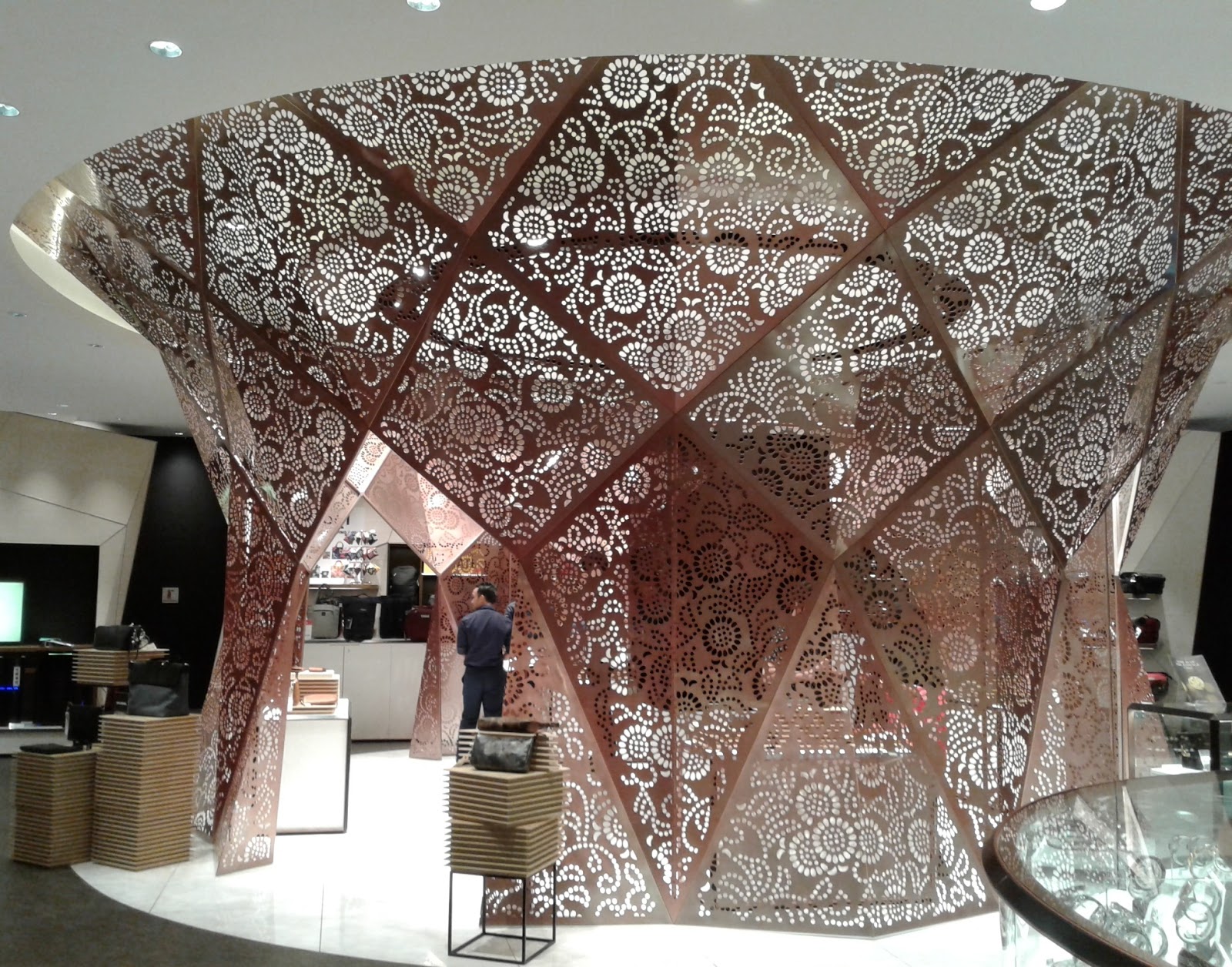
So I was quite surprised to visit the old one in Kuala Lumpur's Lot10 mall recently. This Isetan has had a major refit, and rebrand! Labelled 'The Japan Store' the new version shopping experience was a bit of a treat to walk around. Each storey of the building was named and themed, concessions were situated in artsy pods reminiscent of The Serpentine Gallery's summer pavilion commissions. There were hipster cafes, breakout and work areas. Products were arranged and curated more like an art gallery than a department store. On the top level are Japanese restaurants, and the basement food hall is now a very Japan affair, with exclusively high-end Japanese foods, eateries, drinks and liquor. It was like walking into a nicely designed store IN Tokyo. (And I have to say, after a dearth of anything affordable and fresh/unfried in KL, I was delighted to find a healthy Japan-style salad bar there too!) 


Interestingly, there is more than one Isetan in KL, and the others are still regular department stores. So this one is a specific flagship, and I would guess set up to differentiate the brand from the plethora of identikit mall anchors around the city. The Lot10 store itself is in an odd location - it sits back, on the edge of Bukit Bintang's retail strip, in what is by Asian standards an 'old' mall (generally viewed as 'less desirable' over here). A new MRT has just opened nearby-ish, but the real draw of this area seems to be the outsized, dull and flashy Pavilion Mall complex at the other end. Perhaps this is why Isetan chose to refurb this particular branch? To give people a reason to walk the extra metres for a uniquely Japanese experience - rather than just bypass Isetan entirely while heading to the flash? The other large (and far more prominent) stores in the Lot10 mall are Zara and H&M, however. Which surely pull in not-so-style-conscious youngsters with limited cash. So I don't think this ready-made footfall would be of much use to Isetan! 


My query is whether this fab new concept store actually sells anything. Or perhaps high-sales are not its primary objective?? (Can this be the case in retail? Could retail space be so cheap in KL as to support an almost pure 'branding exercise'?) The new store is beautiful and classy, but the items scarce, and pricey. It was nearly empty when I visited (on a Thursday late afternoon). Even the cafes were quiet. Japanese products and style are more respected and fashionable in SE Asia than in Europe, for example. But I'm not sure with the same groups who would also have the incomes to regularly shop at this store. Japanese expats - with both the cash and inclination to frequent it - would be an obvious market. But there is only a tiny number of them in Kuala Lumpur, especially compared to somewhere like Singapore, where there is no 'Japan Store' flagship like this. So, I'm still curious as to 'why Lot10, KL'? 

Anyway, if you're visiting KL's Bukit Bintang area, it's worth a look. 

Friday, 21 April 2017

East / West drinks: Healthy Barley

This drink is so ubiquitous across Singapore and Malaysia that locals will probably think I'm nuts even writing about it. But in fact a) it is quite yummy  b) it might have health-giving properties c) it might be another of the things shared between the SE Asia and the UK.

In Singapore
The drink is a traditional Chinese one, and is basically boiled barley (ideally Chinese barley, apparently) to which some honey or sugar is added for flavour. The drink includes soft barley grains in it and you can drink it hot or cold (and eat the grains). When not too sweet, I personally find it a very refreshing, stomach-calming beverage, and a good antidote to over-oily or spicy food.

You can still buy the relatively real-deal at hawker centres in Singapore. (Plus a whole host of fake / chemical canned and bottled versions too, which are worth avoiding!) Here's a homemade one I bought at a hawker centre last night :) 


In England
Barley water in the UK is also an old, traditional drink, it turns out. In Europe, even the ancient Greeks drank it. I don't know if England's version was locally evolved, or was inherited from one of the countless invasions we had historically. But it's old. And probably not stolen from Asia! The English version is also barley boiled in water, but tends to contain no grain on serving. It is often flavoured with honey/sugar, and additions such as natural orange, mint or lemon. Today (and even when I was a kid) barley water was seen as an old fashioned drink which granny favoured. And I'm not sure how common or easy it would be to buy the real thing now. (Unless it has gained popularity on the hipster circuit, maybe?) 


20th century advertising: I first encountered 'barley water' as a bottled, mass-produced, cordial to mix with water, by the same people who made (fake) orange 'squash'. It was the 1980s, I was about 10 years old, and I preferred fake barley because it didn't contain the same, asthma-inducing, chemicals that the popular, fake, orange 'squash' did! (These were the days before we realised the harm in chemical additives and started to regulate them / warn consumers...) Back then, mass-produced barley water's refreshing qualities were nonetheless advertised in association with Wimbledon tennis and classy summer sports. In fact the drink had been associated with Wimbledon since the 1930s, apparently (when I assume it was a more natural, pre-chemical recipe!) Here's an ad from the 1980s (1970s??)


Healthy benefits of the real deal
According to (possibly tenuous)(possibly selling barley water) sites online, by Western standards this drink can help aid digestion, flush toxins and bacteria from the body, lower cholesterol, boost immunity, make you slim (!) and.. erm.. quench your thirst and cool you down. Who knows!

The Chinese believe that the drink is good for relieving 'heatiness'. This relates to yin and yang, and is different from Western 'heat'. Heatiness and anti-heatiness (coolly things) are very commonly talked about in Singapore, and I've never 100% got my head around it! The basic is that different foods lead to one or the other, and ideally you balance them to stay healthy. The beloved fruit durian, for example (heaty), is usually sold alongside mangosteens (coolly) at stalls. So you can keep balanced.

Make it at home!  
Either, way, it seems making your own natural barley at home might not be so difficult. Here's a recipe for English mint barley water if you wish to try it!
https://food52.com/recipes/18063-lemon-mint-barley-water 


Friday, 4 November 2016

People, damage limitation, Dentsu and debacles

Two things happened recently which struck me: 

1. The Wells Fargo scandal in America: a fest of fake and unapproved accounts were set up by employees who had apparently been set ridiculous targets under threat of firing.

2. Ad giant Dentsu was found to have massively over-estimated / over-charged multiple clients for digital marketing. The agency’s apparent response: to broadly blame overworked employees for the 'mistakes'. This in itself a curious choice of damage limitation – admission that you both overwork your staff to the point where they lose competence, then dishonourably blame them for the company’s wrongs as well? (Where is the management responsibility in this?) I know that Japanese cultural workplace expectations differ from the West's, and overwork is seen as less unacceptable - but Dentsu is a global player, and surely this statement was still a giant blunder of the comms kind too? [Though possibly judged as less damning than a more obvious statement: ‘We’ve been cooking the books!']

I don't know much about retail banking in the USA. If similar to the UK, it's unlikely it would be like investment banking, where there is a high-risk-high-reward parcel to the job. Retail banking employees might be on a far more modest outlook, and adrenalin stress not what they signed up for. I know for a fact that the advertising gals and guys below senior management would not be getting handsome remuneration for long hours.

But what connects the two stories is this: you can’t poop on your staff. High pressure environments with low trust cultures (as both these stories’ outcomes point to) will eventually lead to something coming unstuck. And both these examples show how damaging on a large scale THAT can be!

These news stories are a hard business case for what is often viewed as ‘fluffy-softie’ management practice. And by fluffy-softie, I mean human. Having worked across a number of companies, of varying sizes and profitability, what has stood out is that most outfits are comprised of the sum of their people. Who (even in marketing) are mostly humans. The culture might be high-win, or not, but if your people can’t trust the management / machine, and can’t feel part of the team, what incentive is there for them to be conscientious, give extra, or – if it's really bad - even uphold good practice in return? And in the majority of sectors, if your people aren't on board, what do you actually have left? Business leadership is not just about cash or bluster (or ego) but a respect for your people, their time, their health, and right to function with a sound moral compass.

FYI it is also interesting to note that Wells Fargo's first response was to fire a tranche of 'rogue' middle management and teams. But not senior management, who were ultimately accountable. More quick blame on the employee, without responsibility taken higher up! Surely if internal company investigations needed to be done, all levels should have been afforded the same time and consideration? 


Even as recently as a decade ago, it was a not-uncommon view held by some colleagues at my business school that including a human approach to business was silly, weak, and female (the very word 'female' implying useless). Which is worrying from many angles. This article is not gender related. But really, THESE men were potentially today's business leaders?? Thankfully the CEOs and other more experienced adults on the course did not think this way. And our textbooks didn't either. But the point is, a crucial factor was discounted by a group of on-paper-intelligent people - you can't actually run a good business focused on profits alone, any more than you can on people-wellbeing alone. The leadership thing is by nature multi-faceted, which is presumably why top management are paid so much.

Anyway, perhaps the positive value of Dentsu and Wells Fargo's huge, public, falls from grace (and yep, consequent losses in profits) is their stark illustration of the importance of decent people management in the overall business mix.


Since I wrote this article (on a bus, in September, when these stories were both hitting the news) Dentsu has been in the press again. This for a far more tragic situation – investigations into the 2015 death of a young advertising employee, possibly from overwork. This raises a whole bundle of other questions about employment, and possibly Asian cultural practice too. Another aritcle. But this sad incident had actually taken place before the company cited overworked staff as an explanation for their billing errors. Not sure what that says. But it doesn't sound too good right now.