Showing posts with label Business. Show all posts

Tuesday, 10 September 2019

After Asia: The UK Does Not Do Tech

It's true! 

When I first moved to Singapore eight years ago, I remember being slightly horrified that so many things were online and automated. Because to me, anything using technology would be at best unreliable for use. THAT is because I'd been living in the UK! I was delighted to find that in Singapore (and nearby countries) technology works 99% of the time. And it actually does what people had trumpeted it should: make our daily lives simpler, more efficient and less stressful! 

That last statement certainly did not apply to the UK in 2011. But shockingly, I find it still doesn't now! I had coffee with a Japanese friend quite soon after I returned and was having problems with internet service. And she basically laughed, and coined the title of this post: "The UK does not do tech!"

OK, of course technology exists in the UK, but in a vast majority of cases for regular humans, it just doesn't work. I know Brits will be hopping up and down going 'But it does work!' - but compared to even some developing countries in APAC, it really doesn't! Here are four examples from my recent time in London: 

1. Supermarket checkouts have been automated. There could be maybe 20 self-service machines in a larger store now. And regardless of whether you agree with automation or not, at the very least, that should mean no queuing for the customer. But it's almost guaranteed that 50-60% of machines will be Closed or Out of Service. Or in service, but break down while you're using them. So tellers no longer get paid, and customers still wait in long queues.

2. A large number of MRT stations (especially outside central Zone 1) are no longer manned. Again, a controversial move driven by cost, and there have been concerns over passenger safety etc. But it means that at some stations we rely solely on the machines for any queries or transactions. And again, 50% of the machines don't work! Or they will work for just one of the several services they're supposed to provide. But it might not be the one you need! I mean, a basic would be to allow people to buy tickets/travelcards, no? But I've been stranded at stations several times with groups of frustrated passengers - at a bank of machines all rejecting our cards and spitting out our cash.

3. Home internet breaks down! This is something I had completely forgotten could happen! In SE Asia, it's a given that your net is provided 24/7 - 365. Just like water, or electricity. And a company which couldn't do that would probably fold quite fast! And in fact, while living in Kuala Lumpur, we'd actually have power and water outages, but the net provider was solid throughout! (Well, apart from during the power failures obviously!) In the UK, net can fail completely, for weeks in some cases (as experienced with a terrible provider here called VirginMedia) and with ridiculously difficult processes to contact customer services, who are also not interested in helping! I am actually amazed that this company hadn't folded. But I guess the bar is set very low for service and tech, so people still go back to them? (Home internet is also very expensive in the UK!)

4. Online services do not work. Some do, and occasionally commercial outfits - such as my bank - have actually improved in the past eight years. But try to (again) buy a train ticket, order medication, or do other important things online, and there's a high chance that it won't work. AND it will probably require hours of your time and stress discovering this! AND old-fashioned systems have often been removed in favour of the non-functional tech - so you're left with no way forward! The centralised (non-MRT) train ticket systems are so atrocious that my flatmate (who needs to travel regularly for business) will actually make the trip across London to visit the station offices and buy in person. It takes a few hours of his day, but he says still saves time over attempting to do anything online! None of this seems very first-world.

Like I've said before, compared to the APAC region, the pace of change in the UK is very slow. But it has been EIGHT YEARS since I left, not eight months. And I find the continued inability to make tech work wholly perplexing! There are many, many very smart people here, who know how to do the various facets of tech. Famously, the internet was even invented by a Brit! So why, in 2019, does tech infrastructure still work so poorly? Sure, it's a bigger country than Singapore. And there's existing infrastructure to overcome (?) to put in the new. But making a basic website transaction work? Or getting reliable internet access for a home in central London? What's going on there? The failures happen across both government and commercial systems. Is there just terrible management managing the people who know about tech? A dearth of talent for one, vital facet of tech? One can't argue with the fact that technology is our present and future - so it seems unlikely that poor investment is the problem, especially at commercial level. Or - like the VirginMedia example - has the bar of performance for consumers just been set so low in the UK, that organisations just don't really care or try? 

It's not good news for our economy, though! Safety and ethics aside, wasting hours of working people's time, leaving them stranded at stations, or without medications, because of bad systems does not put us in a good position! Especially when other parts of the world have harnessed technology and are racing ahead with it. 

Hopefully I will at least be able to publish this post successfully! 


Photo credit: Twitter

Friday, 19 October 2018

Don Don Donki

This opened recently in Singapore, and it seems caused quite a stir. Partly because it was handy, cheap and from (fashionable) Japan. And partly because there were sex-toys openly on sale. According to the media. I don't think they are on sale now.

Don Don Donki is a price-friendly Japanese supermarket. Selling mostly Japanese things (it seems from quite a wide range of products!) And, I think, like its contemporary (the wonderful, relatively sex-free) Daiso, probably set to be hugely popular across SE Asia.

As for the toy debacle, I didn't see them personally (and was overseas when the news controversy broke!) so I can't say how indiscreet they were. But apparently they were portable and for men. And tbf to Singapore, subtle Durex toys are on sale across the nation state's 7-Elevens and pharmacies; it's not hyper-prudish. So was the indecorous story deliberate PR for the Don Don Donki Singapore launch? This seems less likely in conservative Asia. But the store has been a major hit with Singaporeans either way.

I finally got to visit this month. And it was quite nice. Packed to the rafters with decent quality, affordable Japanese things (groceries, pharma etc in this branch). Of course most packaging is in Japanese, so there's an air of mystery for non-readers. But we purchased some ice-cream items which turned out to be ridiculously yummy - hoorah!

In fact this chain - named Don Kihōte (ドン・キホーテ) though apparently known as 'Donki' there - is Japan's largest grocer. It was rebranded Don Don Donki for Singapore, the phrase taken from the store's own theme song "Miracle Shopping" which was even released as a single in Japan. There are some other Donki brands under the (it seems huge) Japanese umbrella owner, the Don Quijote Group. The original chain (initially called Just Co) has been around in Japan since 1980.

Anyway, here's a video I took in the Singapore store - which we first rummaged around quite late at night, as this supermarket is open 24 hours.


Something 'mikan' (tangerine) melty, mild orange-choc segments filled with ice-cream. Lux.
Matcha (green tea) Mini Milks. Bloomin' yum.


Also on this blog:
Donkey surprise! And the UK case of the bogus burger..
And in your mall this afternoon...


Tuesday, 28 August 2018

Cyberjaya

This is Malaysia's purpose-built, hi-tech town and science park. At around 30km², tech-enabled Cyberjaya is situated in Sepang, on the outskirts of Kuala Lumpur, anchoring the country's so-called Multimedia Super Corridor.  The town was launched in 1997 with the aim of establishing Malaysia as a go-to/vibrant hub for, well, technology, science, and R&D in ASEAN - and, later on, globally.  (Cyberjaya was created alongside Putrajaya* - a new hub for government.)

Tbh, this seems pretty smart to me. As time has told, tech has become a humdinger in this region (I think moreso than in the West). The agility and speed of nations in SE and E Asia is quite staggering at times; and as they develop and grow, new ideas (tech) are adopted and rolled out quickly. There isn't the cynicism of the West, nor existing alternatives or old ways. Because a lot of these countries are 'new'. So in my view, Malaysia's government (plus McKinsey) was pretty shrewd with the Cyberjaya plan.

But I remember there were lots of jokes locally in the late 90s - heard via my brother who was in KL at the time - about how Cyberjaya would never work. How it was all talk without functionality (and, it certainly seems, local buy-in). Then the place launched, and I kinda heard nothing more. I read that there was a world-class, state-of-the-art 3D movie-making facility there, and a multi-media (now outdated term?) university. But no more news.

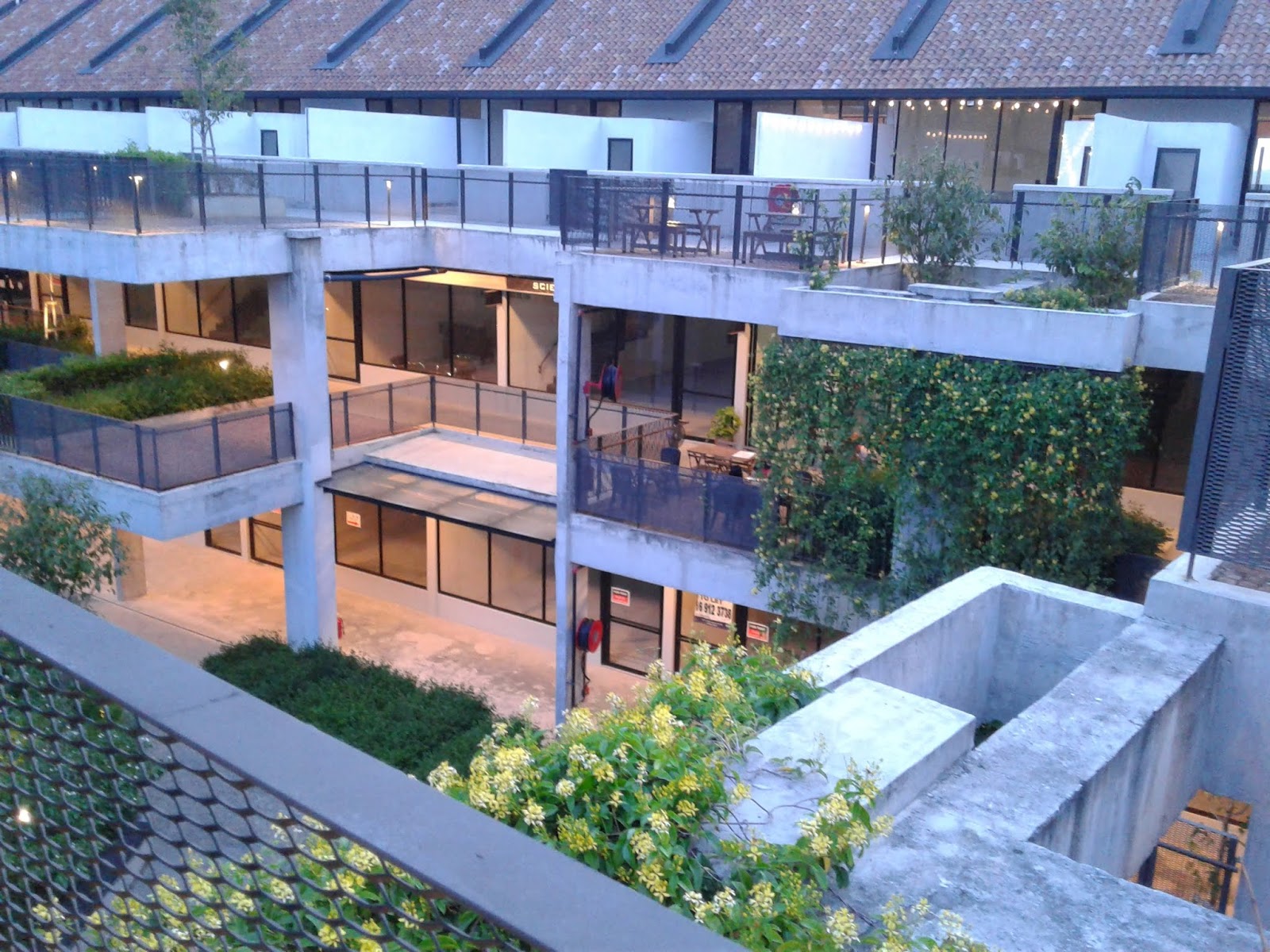
About a year ago, a business colleague from the UK had a meeting in Cyberjaya. His feedback: "A bit of a ghost town". And this week I actually joined friends (with a car) for dinner there. In fact we were visiting a new development, which my pals had worked with. And it was pretty nice! Opened only about a year ago, Tamarind Square is a complex of interestingly designed boutique office and shop spaces - I would say mainly catering for SMEs, although there's a larger retail area with a flagship (?) grocer's, 24-hour bookshop, and other stores. The entire space is bound together by gardens and walkways with creepers. There's a great new-community feel to the place, and I can imagine a smart, young crowd working and collaborating there - with hipster cafes, al fresco eateries, and yoga spaces on hand. Currently however - and OK, this place is pretty new (and not entirely complete) - it is a bit of a ghost town too.


So what happened to Cyberjaya? Well, I didn't get to explore the whole area, but from our drive to Tamarind Square, it seems a lot still is under construction. And to be fair, 1997 saw the onslaught of the Asian Financial Crisis - which was tough for many nations and saw this project being propped up by government. There are tax incentives, and almost no restrictions on foreign talent if you set up in Cyberjaya (as a foreign company?) and I've read that many big globals (IBM, Wipro, BMW etc etc) do have a presence there. And the district is apparently profitable. But it still has that ghostly air. 

Kuala Lumpur and suburbs also still suffer from inadequate public transport. And while the cleaner air of Sepang might appeal, it turns out there is currently only one train station to serve both Cyberjaya and Putrajaya. (And it's part of the KLIA Express - a non-interlinked line!) There are limited buses, too, apparently. But it took quite a drive for us to get from KL out to Cyberjaya - and from what I saw, a lot of the new district is quite sparse. Personally, even with a car, I would not be tempted to invest in a swish residential unit there, and would find it a difficult commute for work: it's too isolated, with not enough locally (yet) to make it worth a relocate. If others are thinking like me, then there is a chicken-and-egg situation going on. Retailers etc will move in when there's footfall. But people won't settle without amenities and retail.

My Malaysian friend had an additional explanation: Cyberjaya was too early. The government was smart to think about it, but the rest of the nation (public, workers, businesses) weren't switched on to tech, and didn't have today's fashionable entrepreneurial spirit back in 1997. So I guess the project lost brand momentum. And if anything needs sparky, up-to-date and forward-looking brand momentum, it's probably tech/R&D. There is also national government support for the majority ethnic group in Malaysia, which (it has been argued) discourages the survival instinct which could be applied to other visionary projects in this region - Singapore as a whole country might fall into this category! - and gets the workforce behind national growth and eventual success.

There are probably 110 other things to consider in Cyberjaya's story. But I really hope that it does become a successful R&D hub, or ASEAN Silicon Valley. Two new MRT stations are set to open in the next five years. That would be a (n overdue) great step in the right direction imo. And who knows, maybe today's creative, entrepreneurial, yoga-loving, crowd will be part of the solution, too? 


Here's some blurb: 
Cyberjaya Malaysia
Tamarind Square 


* Jaya in Malay means 'success' and is applied to countless towns, districts (even stores) across the country. I guess for good luck.


Wednesday, 18 April 2018

Work-life-balance East and West

East Asia is famous for tough office hours and dedication to work. "The industrious East" is still a global brand, which has been upheld by the recent economic track records of places like Japan and China. Many cultural aspects from East Asia have also influenced South East Asia (Chinese diaspora, general modelling on successful 20th century practices). And there is a huge energy of growth and change in the whole region - which you don't feel in the peaking (peaked?) West. 

So, all good for Asia*, right? Well, maybe not. My observations of, and conversations about, the Asian work ethic have been unexpected... 

2015-17 was a fairly momentous time for the marketing industry in Japan. Tragically, a young Tokyo employee at ad agency Dentsu died of overwork. In fact the occurrence is not uncommon in Japan: there were apparently 84 deaths in 2016 linked to overwork. There is even a word for it: 過労死 (karoshi - overwork death). The marketing industry worldwide also has a deservedly bad rep regarding employee work and pay. Long hours for free are regularly expected - even factored into  agency business models. It used to be bad enough in Europe; you can only up the ante in Asia. But what was different about the Dentsu tragedy, was public outcry, and an open trial of company executives. Which actually highlighted working hours as a problem. And Dentsu was found guilty of breaching employment legislation. Whether the company's resulting (microscopic) fine, or alleged changes to working hours, really affect things going forward, though, who knows. It seems the death was perhaps more the result of company culture and tacit expectations. Which might not be unique to Dentsu. Or Japan.

In many parts of Asia, 'hard work' in the office does not mean the same thing it does in Europe. It means long hours. Sometimes very long hours. But not necessarily productive ones. 

There are reasons for this. For example, in many East Asian countries (and countries with East Asian influence) it has traditionally been seen as bad form - or a loss of face - to leave the office before your boss does. And your boss (who might be on a humungous salary to justify such long hours) could stay very late. So the tacit ruling is that everyone has to stay very late. It's not about productivity, or results, but a show of 'honour'. 

Japanese friends have told me that they would regularly (deliberately) spend hours during the day 'filling' time (on Facebook, having tea etc) because they knew they would be honourably in the office until 9pm anyway. Even if they had no work to do! 

My experiences in Singapore were not dissimilar. People would complain of the long hours they worked (and they often did!) but I'd note that during the day there was a lot of sitting around, chatting, smoking and doing nothing work-related. This quite shocked me, when I first arrived from London. I'd imagined the pace would be the same, but just for longer - hence 'the industrious East'! In fact the pace was a lot more laid back overall, and 'stretched out' - probably due to decades of this long-hours/late-night expectation. Even in the trendier workplaces, where more reasonable hours were apparently operated, there was an expectation of 24/7 instant availability via phone or email, which was regularly used (so no time is your own!) I know from experience that out-of-hours contact is rarely necessary in my profession (once? twice? across my entire career!) But in Asia there was still a vibe that it had to be done regularly to 'appear industrious'. 

Chats with colleagues also revealed that although a practice might be 'traditional' or 'honourable' it can still be - and was! - resented.


Yep, an inevitable negative of the long-hours thing, is that people lose out on their own lives. Time with friends, family, to pursue hobbies, sports, romantic time, down time, cultural time, inspiration time, adventures, and all sorts of other things get scuppered for the long-hours office culture. Sometimes even without the compensation of extra pay. And many Asian people loathe it. It seems that regardless of region or culture, people worldwide have similar basic needs. And being able to own your own time - or at least a decent proportion of it - is one of them. (To lose this time while actually doing nothing important at the office seems like a double whammy to me!) 

In the UK (in my industry, at the same relatively senior level) the working style was different. I'm not saying that it was the perfect solution, or that it was stress-free - in fact in many was there was higher stress. But we worked pretty intensely during the day. It means that we could get the business results, and still leave on time to enjoy our evenings and weekends. And there is increasingly a culture where nobody is quietly frowned-upon for doing so.

For example, I'd get in at 9am, make a coffee, then be at my desk constantly, 100%  occupied with work tasks, until lunchtime. And the same in the afternoon. Meetings were ideally kept short, direct, to minimise 'lost time'. No lolling around, chatting or social media (except during lunch hour if I wanted to). Business school was a further refining of this work-style - with most teams working to Pareto to maximise returns on (very) limited time. That was part of the training. 

Misconception: so the Asian view that Europeans 'have it easy' is not quite correct. We work very hard, but we try to work smart, so that we can also enjoy 'life outside'.  Plus many companies now encourage this, and judge us on our results, not time at our desks, or on our phones. 

For most EU countries, the maximum legal employee working hours per five-day week is 40 (48 for a six-day week). It's averaged out, and there are exemptions for some professions. But eight hours per day is the standard rule. And economies do not seem to have suffered for it. In fact some of Europe's most work-life-balance aware countries (Germany, France, The Netherlands, Sweden) are also its most prosperous. 

Management experts (albeit probably Western ones!) agree that happy, enriched people, with a handle on their own time, actually have higher productivity and buy-in during their shorter work hours, and benefit businesses more. (Resentful ones, obviously, far less!) And for the creative industries especially, I always wonder how great ideas can flourish if experiences / inspirations are limited to the workplace. 

I'm not doing a whole 'West is Best' thing here (most of you already know that I'm fairly aware of that bias!) And one can't argue with the success of the Asian tigers. People do things differently. And achieve goals differently. But when described to my Asian colleagues, they nearly all thought the more intense Euro-style sounded pretty good, especially if it allowed evenings and weekends on their own terms. In fact, some of the younger people already had exit dreams and plans: to step out of the rat-race once they were solvent, and opt for more work-life-balance. 

I've noted East and South East Asian countries are often places of contradictions. In many ways they can be socially ultra-conservative, staunchly unwilling to alter tradition. But this alongside (or perhaps because of?) fast economic growth, agility, innovation and change. 

The work-life aspect is one social tradition which might change soon for this region. And we can probably thank the Millennials for this! There are some things I admire greatly about the new Millennial generations over here. While they're labelled as faddy and entitled (which is sometimes true) they're also questioning a few daft traditions, and turning them on their heads. 

Low-conception (an aside!) 
I also have a theory about the declining birth-rates in countries like Japan and Singapore. A drop governments and economists have worried about for a while. Of course it is a problem with some complex socio-economic roots. But if you're in the office until 9 or 10pm daily, this seriously limits your social time (finding a partner), time for getting to know him/her, or romance WITH an existing partner. AND probably the energy to feel generally happy, relaxed and romantic in the first place. Does this help bring on healthy new generations of bouncing babies? In my view, Asia's long-hours office culture seems to be at odds with a lot of the region's traditions of children and family, as well as modern economic considerations. Increased work-life-balance could be a serious win-win for Asia! 


* I'm using 'Asia' to apply to the East and South East Asian countries mentioned in this post. For ease. I do realise that it's a huge continent full of diversity. Just as Europe is. (And I've also referred to Europe in the general sense, to make broad comparisons with East and South East Asia).

** The Pareto Principle suggests that 80% of results come from 20% of your tasks. So that 20% should be identified, and strongly prioritised. 


Also on this blog:
People, damage limitation, Dentsu and debacles


Thursday, 18 January 2018

Adblocking – the 'them and us' of marketing?

TWO APPARENTLY UNRELATED THINGS

1: Anyone who's studied business is probably familiar with a version of this rivetingly artistic diagram. It's a model of a marketer's wish-list, and it is achieved by building their target customers' trust. With increasing trust, sales, repeat sales, even valuable advocacy and partnerships can be possible. Hurray! 


2: Some examples of crap tech.
  • Instagram puts up horrendous recreational hunting videos on my suggestions page, because it has noted that I like 'wildlife'. Yep, both involve animals. But they're ABSOLUTELY not the same thing.
  • Just after hols, I reviewed the very nice resort I'd visited, on TripAdvisor. On the next web page I opened, a banner flashed up urging me to book a holiday at this resort. Well I was only there yesterday... do I want to book again, now? No. Do I want this orange animated thing flashing at me? No.
 
WHY THEY FIT TOGETHER

Like 90% of people in APAC today (apparently), I love my adblockers. Hitherto irritating experiences with platforms like YouTube (which temporarily made me switch to Veoh and other options) have once again become interesting and engaging. Because I go in there to view specific content, to learn, be entertained, escape and enjoy. Not to have trashy ads telling me to buy buy buy (or that I 'NEED a website!'). And I certainly don't go online for the learning, enjoying thing, to find content that is really advertising masked heavily as something else. (Known rather euphemistically in the industry as 'native advertising'!)

And yet I've just been reading an article (for and by marketers) discussing exactly the above but suggesting the way forward is to be even sneakier and tech-smart about getting their client's brands under the noses of us adblocking public who don't want them. It's all about speed of upload and targeting, apparently. Or is it?

OK, targeting sounds smart. And I don't think anyone will argue that it's most certainly better than the 'spray and pray' of yesterday (which is still happening today – website, anyone?). But there are some problems with this too:
  1. Some people don't like their data and behaviours being tracked, aggregated and used to 'target'. I don't know what the stats for this are in APAC, or even if we have a choice, but for many, it's not a trust-builder
  2. A lot of the tech for so-called 'targeting' seems to currently fall way short of having even basic common sense. (That's where the recreational hunting and trip example come in.)
  3. The whole concept of speed and targeting might be missing the point entirely. Because adblocking suggests that we don't want ads.

The rise of adblocking (and also the new, EU-style, protective data privacy laws which are set to hit Singapore this year) both seem to be approached by marketers and their agencies as 'evils' which need to be overcome or circumvented in clever ways. And of course all businesses need to monetise, and to sell, otherwise, no point. But what seems to be have been lost from this whole, high-cash, high-energy, marketers' circle is that thing with the unglamourous ladder: customer TRUST.

So is a new ladder emerging? Where the value chain for humans in the digital age is not about building trust to achieve sales, advocacy and co. But brands being clever and non-transparent enough to trick or pressure us into buying products instead - and use paid 'advocates' to trick us a bit more? Where the brands/marketers and their customers are opponents in a sort of tacit battle of wits?

To be honest, perhaps this is working. Or working well-enough. There seem to be big bucks invested in it. Though that 90% keenness on adblocking might be problematic here!

OR does a different model need to be found, to build trust via more transparent and thoughtful means which genuinely include and respect the customer? Maybe marketers need to jump off the 'pushing ads' hamster wheel and think of something else entirely?

Some outfits are already exploring avenues such as rewarding users who view / engage with their ads. And my personal opinion is that consumer choice of WHEN to view is key: I don't want an annoying orange banner flashing pointlessly at me now; but in a year's time when I'm actually booking another trip, I might like to ask for its help.(SEM, anyone?) 

Let's see how this one pans out!


PS: I don't NEED a website. And if I do, this particular outfit – which barked at me 20x daily on YouTube for so long - will be the first provider deleted from my list!

PPS: And I don't work in sales. I'm just a consumer :) 


Tuesday, 25 July 2017

Isetan's new concept in Kuala Lumpur: 'The Japan Store'

For those who haven't come across it, Isetan is a Japanese department store with branches worldwide. There used to be one in London, even (I'm not sure if there is still? I think there are plans to relaunch one there). Like its other half, Mitsukoshi, Isetan is a regular department store, but selling quality Japanese products as well as global brands. 

Click on photos for slide show
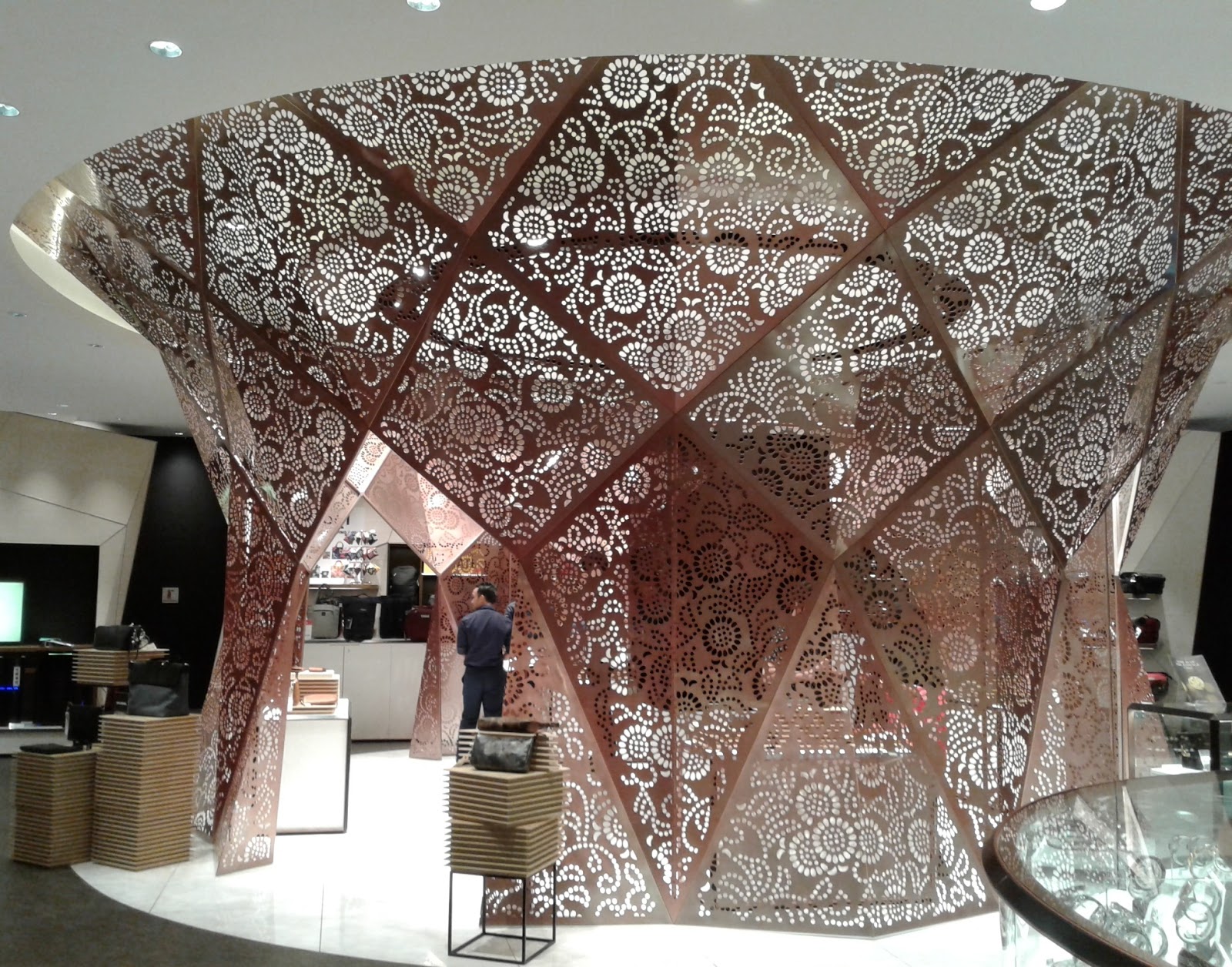
So I was quite surprised to visit the old one in Kuala Lumpur's Lot10 mall recently. This Isetan has had a major refit, and rebrand! Labelled 'The Japan Store' the new version shopping experience was a bit of a treat to walk around. Each storey of the building was named and themed, concessions were situated in artsy pods reminiscent of The Serpentine Gallery's summer pavilion commissions. There were hipster cafes, breakout and work areas. Products were arranged and curated more like an art gallery than a department store. On the top level are Japanese restaurants, and the basement food hall is now a very Japan affair, with exclusively high-end Japanese foods, eateries, drinks and liquor. It was like walking into a nicely designed store IN Tokyo. (And I have to say, after a dearth of anything affordable and fresh/unfried in KL, I was delighted to find a healthy Japan-style salad bar there too!) 


Interestingly, there is more than one Isetan in KL, and the others are still regular department stores. So this one is a specific flagship, and I would guess set up to differentiate the brand from the plethora of identikit mall anchors around the city. The Lot10 store itself is in an odd location - it sits back, on the edge of Bukit Bintang's retail strip, in what is by Asian standards an 'old' mall (generally viewed as 'less desirable' over here). A new MRT has just opened nearby-ish, but the real draw of this area seems to be the outsized, dull and flashy Pavilion Mall complex at the other end. Perhaps this is why Isetan chose to refurb this particular branch? To give people a reason to walk the extra metres for a uniquely Japanese experience - rather than just bypass Isetan entirely while heading to the flash? The other large (and far more prominent) stores in the Lot10 mall are Zara and H&M, however. Which surely pull in not-so-style-conscious youngsters with limited cash. So I don't think this ready-made footfall would be of much use to Isetan! 


My query is whether this fab new concept store actually sells anything. Or perhaps high-sales are not its primary objective?? (Can this be the case in retail? Could retail space be so cheap in KL as to support an almost pure 'branding exercise'?) The new store is beautiful and classy, but the items scarce, and pricey. It was nearly empty when I visited (on a Thursday late afternoon). Even the cafes were quiet. Japanese products and style are more respected and fashionable in SE Asia than in Europe, for example. But I'm not sure with the same groups who would also have the incomes to regularly shop at this store. Japanese expats - with both the cash and inclination to frequent it - would be an obvious market. But there is only a tiny number of them in Kuala Lumpur, especially compared to somewhere like Singapore, where there is no 'Japan Store' flagship like this. So, I'm still curious as to 'why Lot10, KL'? 

Anyway, if you're visiting KL's Bukit Bintang area, it's worth a look. 

Wednesday, 12 July 2017

Operating #RefuseTheStraw in Asia: Week 1

Yep, I'm giving this a go. Even though the main campaign is aimed at Europe and N America. 

Plastic bottles and bags are a worry, ecologically. But had you ever thought of the humble straw... and the damage it can do en masse?

Straws are such insignificant things, and tbh we often don't think about or (more importantly) need them when we use them. But they also play an unpleasant role in polluting our oceans and food-chains. As the placard says, a plastic straw takes 200 years to break down. And before it does, the plastic clogs up our oceans, can get ingested (often fatally) by sea creatures. When it finally disintegrates - even worse - it becomes tiny toxic particles, which permeate our oceans and their residents. (That's alongside all the bags and bottles which are doing the same things.)

Perhaps not so insignificant, after all?

So I'm going to try to stop using them. Or at least drastically cut down. SE Asia (where I am living now) is really not very good on care for the environment. Compared to Europe, anyway. I know the affluent EU traditionally has some of the world's best scores for being eco-friendly, and kids have grown up being educated about it for some decades. But it's sometimes shocking to see the use and misuse (and mis-disposal, and complete lack of care) regarding plastic over here in Asia. The situations for a lot of developing, or nearly-developed countries is quite different. I know that there are potentially more pressing things economically for a lot of SE Asian countries. Plus a whole raft of other hurdles such as education, corruption etc to jump before even embarking on this slow journey of change. But actually, I have a sneaky feeling that eco care has become important for everyone now, regardless. If the planet gets screwed, then frankly we're all stuffed!

I'm not an eco warrior, and I have no intention of preaching to anyone. This is just my own effort whilst living in the tropics. Let's see how it goes!

#RefuseTheStraw Week 1 
Obstacle 1. This guy! 


This is the traditional way of serving takeaway drinks in SE Asia. It has been for as long as I can remember (a few decades!) And it's fast, simple and cost-effective. And it's a double-whammy on plastic! OK, for RM$15 (£2.70) you can go to Starbucks for a pristine paper cup of latte. But most locals (and me) will still opt for the RM$1.80 (32p) hawker version! How does one drink this on the hoof without a straw???

Obstacle 2. Nobody knows what I'm on about. 
It's standard practice in SE Asia (including at several Western-style cafe chains) to give you a straw with any cold drink. That's how its served. And we tend to drink a fair amount of cold stuff in the tropics. You can ask for no straw, but it confuses staff and can slow down a long queue. In my case, I requested no straw, but the drink arrived at our table as usual - with a straw! I can not use it, but that rather defeats the object. Also, for the more basic roadside outlets, I have a suspicion that straws (rather than drinking from the lip of the cup) are used for hygiene. More investigation and work required on these aspects!


Success 1! Pacific Coffee Company in Kuala Lumpur
If you are able to pay the prices of a Western-style coffee chain, it's a bit easier to #RefuseTheStraw. Your iced drink comes in a clean throwaway cup (perfectly hygienic to drink from) and you pick up your own straw if you want it. So there's one score on the straw! The hitch here is that the cup itself was plastic. So I'm not sure how much good my efforts did..

***

Why I'm doing it - plus two cases
As I've mentioned before, my (still relatively light!) direct concern for the environment was catalysed when I started to SCUBA dive the outstanding reefs and seas of SE Asia. It is such a privilege to be able to witness (responsibly) the incredible life - a throbbing metropolis even! - underneath our seas. Not to mention the idyllic palm-fringed beaches which are natural throughout the region.

But you'll also see some of the most disgusting ruination of these places by plastic pollution. And when you go underwater - reefs, and animals, choked by it. It's careless, large-scale pollution which I've never seen the likes of on British beaches.

A Business Case
On the most practical level, if you happen to be a developing nation, the beaches and reefs are all huge draws for tourism. They're the free-gift that SE Asia has received!

What happens when the wildlife starts to die off, or migrate elsewhere? Or the beaches become polluted and unappealing? The tourism will also migrate elsewhere. Taking care helps to protect long term local economies, as well as the long term health of our seas.

An Emotive Case 
Here are the waters of a) The pristine natural beach and waves of uninhabited island, and protected dive site, Sipadan in East Malaysia, which I visited last year. And b) nearby inhabited, and not protected Semporna on the mainland. Man makes a huge difference, and look how much of the waste is plastic! :(

a) Sipadan

b) Semporna


Related on this Blog:
Bags of Fun! Eco Practices East and West 


Pic of polluted Semporna: TripAdvisor 

Sunday, 19 March 2017

Bags of Fun! Eco Practices East and West

OK, possibly not all that much fun... 

I've been in Malaysia recently, and noted with some pleasedness that plastic bags were in short supply. Now, some supermarkets make you pay if you want a plastic bag; and most other outlets will ask you ambiguously 'Plastic?' when you purchase an item. ('Plastic?' being typical SE Asian economy-English for 'Would you like a plastic bag for that?') The cutback is apparently a new national directive. And most of the time we indeed do not require 'plastic'. 

The UK and other countries in Europe have had more stringent practices for some years. Plastic bags - most of which are non-bio-degradable, but also bio-degradable ones - cause big problems worldwide. Improperly disposed-of, they clog drainage (I recently worked with a project in the Philippines, where this was the issue and put communities at huge risk during flood times) and have all sorts of detrimental effects on wildlife on land and in the ocean. Even when they're thrown away properly they bung up landfill, and the eventual breakdown releases polluting chemicals into the soil. In fact, even their ingredients and manufacture degrade the environment, and emit polluting chemicals. Bio-degradable bags are not much better. They still require manufacture - with sometimes even more toxic ingredients - and 'bio-degrading' can just mean they release their  pollutants faster. Some conditions and climates mean they won't break down at all. 'Bio-degradable', it seems, does not mean the same as 'eco-friendly'.
 
Of course, for consumer convenience, no bags can be pain in the arse. In the UK, you usually cannot answer 'yes' and get a plastic bag - you have to pay. Large chain supermarkets will charge you 5p (or 5 cents or equivalent) for each plastic bag if you have forgotten to keep a recyclable alternative in your own handbag. The big brand chains probably profit from this; the whole deal is certainly a better bet for them financially, regardless of whether they care for the environment or not (and I would hazard a guess that 'not' applies in many cases, though they might try to greenwash it!) But the cash savings are an incentive to make them comply. Some studies have also shown that if certain areas have bag bans, consumers are more likely to shop just outside that area, for their own convenience (though admittedly the source for one study was Plastics Today ^^). So, the directives have to be blanket, and nationwide. 

I am not a particular eco-warrior. I just grew up in a region where eco has been a big, legislated, educationally-supported, deal for some decades. I got used to carrying my backpack, or an extra tote, around in London. It wasn't 100% convenient, but everyone had to do it, so fair enough. (We pack our own groceries in UK supermarkets, btw - in Asia, cashiers often do it for you.) 

Having been in Asia for a while and learned a little more, I feel a bit more strongly. I am a keen SCUBA diver - which is something I highly recommend, especially in SE Asia, a world hotspot for fantastic marine life. But it's depressing to see bags (and plastic bottles) littering the shores. Or plastic wrapped around remote corals and other suffering marine life. Some are also mistaken for jellyfish and eaten, leading to death for the unsuspecting creature. These are improperly disposed-of bags, of course. And the entire bag-pollution problem is a complex mix of social, educational, economic and political factors which I'm not qualified to outline. But if there are a lot less bags circulating, one can only hope there is a lot less to 'mis-dispose' of too.


Meanwhile...
Next door to newly bag-free Malaysia, affluent Singapore is a very different story. I was shocked when I first moved there and discovered that you get plastic bags with everything - sometimes a double layer! - and in supermarkets, nearly every item will be bagged separately. For a modest six-item shop, for example, you could easily carry four separate plastic bags home. I spent months annoying queuing shoppers and cashiers alike, by trying to insist on one bag only. (I've since discovered that SE Asian economy-English 'No need!' is required for this too. A polite English 'It's OK, I really only need one bag for the groceries!' gets you nowhere! But it's still often an unpopular request.)

More perplexing still, most supermarket bags in Singapore are printed with something like 'Let's protect our environment!' or 'Use bags sparingly'. When the supermarkets practice the exact opposite! A trip to Fairprice or Cold Storage can start to resemble an ironic performance art piece.

So what's going on there? In general, wealthy Singapore tends to be a few steps head of its poorer neighbours, and things are also usually fairly smartly organised. (In fact, on balance, I'd often say better organised than in the UK). But I've not noticed much genuine eco-awareness there yet. There's a bit of 'lifestyle' eco-awareness - ie it's fashionable in some circles to be seen as modern and eco-aware; and corporates do clumsy 'bolt-on' CSR projects to pick up litter etc. But whether this translates into daily eco-aware routine and action, I'm not sure. Recycling at household level seems to be a fairly superficial process, and it's not widely done. I also remember being told off at my office several times, for not reboiling a full kettle each time I made coffee. Because somebody might want to reheat it and make a drink later in the day. This is considerate to potential coffee drinkers, but I'd been taught since teen years in the UK, that you should only boil as much as you need. To avoid waste (of fuel/energy). And be more environmentally positive. In Europe, boiling a full kettle for no direct purpose is viewed as hugely irresponsible!

In fact, Singapore is currently listed at 14 in the global Environmental Performance Index. It is the only Asian nation in the top 30! (Japan comes in next, at 39. Malaysia is no. 63)(And yes, the top 10 are all in Europe!) So something must be being done right at Singapore's higher levels. But day-to-day eco awareness, and certainly the misuse of plastic bags, seems to require some work. 


You can check out the 2016 EPI rankings and report here: http://epi.yale.edu/country-rankings


*FYI for English-learners, 'pleasedness' is not an official word. It is 'poetic license' as neither 'satisfaction' nor 'pleasure' had quite the correct meaning! 


Friday, 4 November 2016

People, damage limitation, Dentsu and debacles

Two things happened recently which struck me: 

1. The Wells Fargo scandal in America: a fest of fake and unapproved accounts were set up by employees who had apparently been set ridiculous targets under threat of firing.

2. Ad giant Dentsu was found to have massively over-estimated / over-charged multiple clients for digital marketing. The agency’s apparent response: to broadly blame overworked employees for the 'mistakes'. This in itself a curious choice of damage limitation – admission that you both overwork your staff to the point where they lose competence, then dishonourably blame them for the company’s wrongs as well? (Where is the management responsibility in this?) I know that Japanese cultural workplace expectations differ from the West's, and overwork is seen as less unacceptable - but Dentsu is a global player, and surely this statement was still a giant blunder of the comms kind too? [Though possibly judged as less damning than a more obvious statement: ‘We’ve been cooking the books!']

I don't know much about retail banking in the USA. If similar to the UK, it's unlikely it would be like investment banking, where there is a high-risk-high-reward parcel to the job. Retail banking employees might be on a far more modest outlook, and adrenalin stress not what they signed up for. I know for a fact that the advertising gals and guys below senior management would not be getting handsome remuneration for long hours.

But what connects the two stories is this: you can’t poop on your staff. High pressure environments with low trust cultures (as both these stories’ outcomes point to) will eventually lead to something coming unstuck. And both these examples show how damaging on a large scale THAT can be!

These news stories are a hard business case for what is often viewed as ‘fluffy-softie’ management practice. And by fluffy-softie, I mean human. Having worked across a number of companies, of varying sizes and profitability, what has stood out is that most outfits are comprised of the sum of their people. Who (even in marketing) are mostly humans. The culture might be high-win, or not, but if your people can’t trust the management / machine, and can’t feel part of the team, what incentive is there for them to be conscientious, give extra, or – if it's really bad - even uphold good practice in return? And in the majority of sectors, if your people aren't on board, what do you actually have left? Business leadership is not just about cash or bluster (or ego) but a respect for your people, their time, their health, and right to function with a sound moral compass.

FYI it is also interesting to note that Wells Fargo's first response was to fire a tranche of 'rogue' middle management and teams. But not senior management, who were ultimately accountable. More quick blame on the employee, without responsibility taken higher up! Surely if internal company investigations needed to be done, all levels should have been afforded the same time and consideration? 


Even as recently as a decade ago, it was a not-uncommon view held by some colleagues at my business school that including a human approach to business was silly, weak, and female (the very word 'female' implying useless). Which is worrying from many angles. This article is not gender related. But really, THESE men were potentially today's business leaders?? Thankfully the CEOs and other more experienced adults on the course did not think this way. And our textbooks didn't either. But the point is, a crucial factor was discounted by a group of on-paper-intelligent people - you can't actually run a good business focused on profits alone, any more than you can on people-wellbeing alone. The leadership thing is by nature multi-faceted, which is presumably why top management are paid so much.

Anyway, perhaps the positive value of Dentsu and Wells Fargo's huge, public, falls from grace (and yep, consequent losses in profits) is their stark illustration of the importance of decent people management in the overall business mix.


Since I wrote this article (on a bus, in September, when these stories were both hitting the news) Dentsu has been in the press again. This for a far more tragic situation – investigations into the 2015 death of a young advertising employee, possibly from overwork. This raises a whole bundle of other questions about employment, and possibly Asian cultural practice too. Another aritcle. But this sad incident had actually taken place before the company cited overworked staff as an explanation for their billing errors. Not sure what that says. But it doesn't sound too good right now.


Tuesday, 2 June 2015

Pseudo-ku : the curse of the 'intellectual'

I was interested to note in a recent Harvard Biz Review article, that it’s been proven that those with very high IQ, are strongly disposed to lack EQ (emotional intelligence – ie ability to be socially and emotionally aware) - and thus need different management techniques. Basically, it was telling us how to lead nerds. And to be brutally honest, there does seem to be a very high frequency of nerds in Asia. I am not sure why this is (OK I suspect it has a lot to do with developing economies, cultures with strong parental controls etc). But that strange, small species of (usually) males who we thought were peculiar, dull and one-dimensional as we cavorted and experimented aged 18 at Uni in the UK, are just ‘regular guys’ in Asia. And there’s a strong chance that the ones at Uni might have actually been from Asia too..  Low EQ is not very popular at University, or with girls – though a very high IQ might be valued in some industries later on, regardless of social skills. Hence the management advice.  

What does seem to be thankfully lacking in Asia however, (or at least in Singapore and Malaysia, where I have lived so far) is the pseudo-intellectual. People over here in Asia more commonly train in ‘useful’, traditional science subjects like engineering. And the popularity of things like art history or philosophy are just not the thing. Yet. And while science-y subjects can attract/breed nerdy, not-great-socially types, the pseudo-intellectual (or simply ‘pseud’) is another kind of social ineptitude which goes with beard-scratching* arts and humanities subjects. (I know this; I went to art school and architecture school, then spent 10 years working in contemporary art!)  

The pseud is the person – usually under 24 years old – who will ambush you at a party and bore you senseless as they launch into a diatribe about Heidegger, Kerouac, the ‘meaning behind their work’ (if they’re an artist) or try to compete with you about conceptual thought or analysis in film/philosophy/literature etc etc. Even if you’re in the middle of enjoying a shandy, and have not expressed the slightest interest in their views on Heidegger or any of the aforementioned.  The subtext from the pseud is often that they're slightly intellectually superior to you (and thus impressive and more cool) if you don’t spar, are not interested in sparring or don’t know who Heidegger is. The real subtext is that they’re immature and lacking in EQ. What might have a place in a crit** or seminar discussion in class, is not necessarily appropriate at a BBQ, or to chat up a date. And that insensitivity stands, regardless of whether you’re boring someone with physics or philosophy. (The difference with the pseud is that unlike the nerd, he/she might not also have a high IQ.) 

Artist pseuds - and this happened A LOT among the amateurs at art school - might go a stage further and actually commit ‘shocking and attention seeking acts’ in order to showcase their intellectual superiority. That ancient adage that notoriety will bring you real fame or respect. I think this is vaguely catching on with some artists in Asia now, actually! *sigh* (Incidentally, the really successful living artists are generally shrewd marketers and business people, not simple attention-seekers, although they might brand themselves that way.) 

Anyway, thankfully, once you're out of college years in the West, pseud numbers start to dwindle rapidly. And given the choice today between a nerd and a pseud, I might well opt for the nerd... or hurling myself into the BBQ pit. In the interim am very happy that the pseudo-intellectual is not yet omnipresent in Asia.


*Beard-scratching, or beard-stroking, is a mocking term referring to the actual act of scratching a (usually goatee) beard, by a pseud, while in ‘deep and meaningful’ thought. 

**A crit is part of art and architecture school training – where you stand up, present and justify your work to a panel of tutors.